Wednesday, January 1, 2020

Editor's Corner


January 2020

“Hope smiles from the threshold of the year to come, whispering, ‘It will be happier.’”- —Alfred Lord Tennyson.
-

Words cannot convey how sincerely moi places Hope in the quote chosen to open this new decade of the New Year. It has been a "2019 what can go wrong, quit, break, disappear, dissolve, crater, etc. period of time around these parts." We did have a lovely family trip/visit to North Texas for Christmas. See pic below.

We are fortunate to get a glimpse into what is most likely to occur or not from the expertise of the Numerologist Michael John Fierro in his forecast for "2020- 4 Universal Year ..." As he puts it: Reconstruction and Building a Strong Foundation or, Destruction and Chaos. This editor shall continue to hope for the most excellent of outcomes.

Meanwhile Mattie Lennon regales us with tales from the past by revered Irish authors then skips ahead to catch the highlights of the first Tractor Pull event for kids in this issue's "Irish Eyes." Judith Kroll ("OnTrek") shares her vision for an ideal approach to stepping into the well heralded 2020.

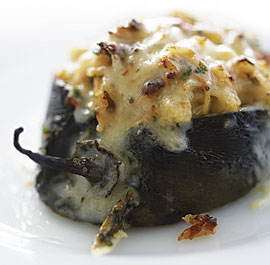
The Genealogist among us (Melinda Cohenour in "Armchair Genealogy") seeks even further into the past with part one on Pierre Cresson, “Le Jardiniere” a 7th Great Grandfather in her tree. But husband Rod Cohenour with a more current agenda shares with her permission a cherished and carefully developed Pollo Poblano in "Cooking with Rod."

Thomas F. O'Neill --"Introspective," discusses goals for the lessons for his students while Marilyn Carnell -- "Sifoddling Along," decries the loss of intrinsic values as the less hurried, less frantic lifestyles flow into the past.

John I. Blair sent three poems for January: "Undeliverable," "Perennial," and "The Glass Door." Bruce Clifford penned two poems "Listen to Me" and "Inside You've Grown." "Her Last Years Alone," "Waiting for the Blue," "On The Threshold," "A Private Poem," and "The Christmas Beat" are the five poems from Bud Lemire.

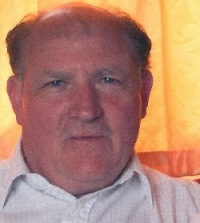
Michael Craner, our co-founder and webmaster, who resembles a certain fabled entity from the North Pole when he wants to, is the key to our well being, our equilibrium, our dreams. Thanks again, Mike!
See you in February!


Click on author's byline for bio and list of other works published by Pencil Stubs Online.
This issue appears in the ezine at www.pencilstubs.com and also in the blog www.pencilstubs.net with the capability of adding comments at the latter.

Armchair Genealogy


Pierre “Le Jardiniere” Cresson
7th Great-Grandfather


      Pierre Cresson was a French Huguenot, who escaped persecution in France at the time of the Reformation by relocating to the Netherlands before making the long voyage to the New World – known then as New Netherland and now called New York. His story encompasses the intrigue of religious persecution and the impact that had on the lives of many brilliant and talented Protestant French citizens.

       Pierre Cresson was born by all accounts in 1609 in Aisne, Abbeville, Picardy, France, at the family manor (Mesnil la Cresson). At that time, Picardy was one of the hotbeds of Protestant Reformation which began in earnest about 1555 and continued through 1562. From that year until 1572, Huguenots gained some ground and then lost freedoms in the political tug-a-war between the ruling Catholics and those embracing the Protestant faith. The culmination of this political rivalry was the horrific Massacre of St. Bartholomew’s Day that resulted in the deaths of thousands of French Huguenots in Paris in the day-long slaughter occurring August 24th through the 25th 1572 in Paris. Catherine de Medicis was the strategist and principal instigator with her plans being carried out by Roman Catholic nobles and citizens who became a part of the killing mob.

      King Henry IV (Henry of Navarre) a Huguenot leader became King of France in 1589. He brought about peace by accepting Catholicism upon his rise to power. The King was quoted as saying, “Paris is well worth a Mass,” an indication that his acceptance of the Catholic faith was a military and political strategy and not a true change of heart. After a tumultuous reign, filled with romantic intrigues with his several mistresses, assassination attempts, and military strife with Spain and political foes within his own country, King Henry IV was working to attain peace and settle the country. In pursuit of this noble endeavor, he entertained the deputies of the Protestant movement and sought to incorporate their just desires into an acceptable framework of law. The result was the Edict of Nantes, signed in April of 1598. The Edict did not grant full and complete parity for French Protestants, though it did provide freedom of worship in the towns in which their creed prevailed. It restored civil rights including the “right to work in any field or for the state and to bring grievances directly to the king.” [SOURCE: https://en.wikipedia.org/wiki/Edict_of_Nantes ) Though granting these desired accommodations, the Protestants were still required to pay a tithe to the Catholic church, any suit at law was to be heard by a panel of judges half of which was to be Catholic and half Protestant, among other things.

      It was into this uncertain and stressful period that Pierre Cresson was born. (Interestingly, John Calvin, the Protestant reformer who carried on the work of Martin Luther, was born almost 100 years earlier, 10 July 1509, in Noyon, Picardy, France. The century since his birth and the impact of his teachings would have a lifelong impact on our Pierre Cresson.) It has been noted that the Cressons of Burgundy in France counted among their family ranks a number of Reformer ministers.

      The early years of Pierre Cresson’s life are not known as the earliest record of his history appeared in the Revised History of Harlem (City of New York): Its Origins and Early Annals .. by James Riker, and Henry Pennington Toler. Their history indicates Pierre fled from Picardy, France, with his young but numerous family members to Sluis, Flanders while yet in his early 30’s. Soon thereafter, however, he moved further north, “…in 1640 is found (with Nicholas and Venant Cresson, both married) among the refugees at Leyden.” He remained in Holland for some 17 years, noted as living at Ryswyk and Delft. During that period of time he was employed as the gardener for William, Prince of Orange, and was forever after known by the sobriquet of The Gardener (“Le Jardiniere”.)

      Thus, we must explore the historical events that affected our ancestor. He had escaped persecution in France seeking a peaceable existence, a life where he was free to worship as he pleased and to enjoy gainful employment. The Huguenots of France were drawn to The Netherlands, where the leaders were more prone to permit their citizenry greater choices. The background story of those rulers is important to understand in order to learn as much as possible about Pierre Cresson.

      William, the first Prince of Orange not blood related to the old House of Orange, inherited the title upon the death of his childless first paternal cousin, Rene’ of Chalon. (This William is the first of his line to enjoy the title, Prince of Orange.) He would become known as the Father of the Fatherland in The Netherlands.) William being only eleven years of age at the time, Emperor Charles V, overlord of most of these estates, served as Regent until William was deemed of age and wisdom fit to serve as head of state. Born in Flanders, Charles V had a powerful history, having served as Lord of the Netherlands (Duke of Burgundy) from 1506, King of Spain from 1516, and then Holy Roman Emperor and Archduke of Austria from 1519. Charles was an avowed Catholic and “spent most of his life defending the integrity of the Holy Roman Empire from the Protestant Reformation…” [Wikipedia]

      Conversely, William was brought up as a Protestant and only schooled in Catholicism as a requirement for his rule of The Netherlands. As a ward of Charles V and his wife Isabella, William was a favorite of the couple and at the ripe young age of 22 was named by Charles as Commander of one of his armies. (This William, known as William the Silent, was the father of Frederick Henry, his youngest son by his fourth wife, Louise de Coligny, the daughter of the Huguenot leader, Gaspard de Coligny.) Thus, we see the conflict of religious aspirations between Charles V, the avowed Catholic, and his ward, William The Silent, who embraced the Protestant beliefs and would in later life refuse to permit persecution of the Huguenots in his realm.

      Frederick Henry, the youngest son of William The Silent and Louise de Coligny, served as stadtholder of the Netherlands from 1625 until his death in 1647. (Stadtholder means regent or steward of the state, the titular head of the government. Although each state or area was permitted to name their own stadtholder, most of these regents ruled over multiple provinces.) Frederick Henry inherited the reign upon the death of his elder brother, Maurice, who was noted as one of the finest military generals in the history of The Netherlands. Maurice trained Frederick, who became almost as adept at the art of war as his mentor. His reign was extensive: “On the death of Maurice in 1625 without legitimate issue, Frederick Henry succeeded him in his paternal dignities and estates, and also in the stadtholderates of the five provinces of Holland, Zeeland, Utrecht, Overijssel and Guelders, and in the important posts of captain and admiral-general of the Union (commander-in-chief of the Dutch States Army and of the Dutch navy).” [SOURCE: Wikipedia, https://en.m.wikipedia.org/wiki/Frederick_Henry,_Prince_of_Orange]

       “William II (b. 27 May 1626 – d. 6 November 1650) was sovereign Prince of Orange and Stadtholder of Holland, Zeeland, Utrecht, Guelders, Overijssel and Groningen in the United Provinces of the Netherlands from 14 March 1647 until his death three years later. His only child, William III, reigned as King of England, Ireland, and Scotland.” [Stet]

       William III was born only one week after the death of his illustrious father. He was named titular head of all the states listed above from his birth; however, he only attained practical rule in the 1670’s when he reached the age of approximately 21. This Prince of Orange, along with his wife, Queen Mary II, co-ruled and that period would become known as the Reign of William and Mary. He became King of England, Ireland, and Scotland in 1689 until his death 8 March 1702.

      This period of leadership of The Netherlands by the various Princes of Orange represent a time of upheaval in many areas of life with numerous wars and political intrigue as various groups attempted to achieve dominance. It was in this atmosphere that representatives of the City of Amsterdam in the New World approached various masters of their trade in The Netherlands with an enticing offer. Thus, Pierre Cresson chose to leave his adopted country behind and relocate to The New World. He would make his mark on his new country. That part of his story shall be the subject of next month’s column.

Click on author's byline for bio and list of other works published by Pencil Stubs Online.

Cooking with Rod


Pollo Poblano Relleno

Melinda Cohenour – 1990


    The New Year is HERE. So is the new decade! It seems almost like a cliché to say some things will stand the test of time – beautiful songs, wonderful food, loving relationships. And, in terms of food, this is one that definitely will stand the test of time. It took M a while -probably three or four years actually, experimenting and trying different combinations until she finally hit one that could hold its own with Mariano’s “Especiale.” There are very few things in the world more varied and more wonderful than Mexican dishes. And I can speak from personal experience that Chile in any form is one of the most – if not THE most – wonderful and variable food in the world. Just as an aside, I recall an incident where our grandson, Adam, requested Stuffed Peppers for his birthday meal and Melinda gladly prepared stuffed peppers – BELL peppers, that is, complete with a salad, mashed potatoes and baked beans. Adam took one look and asked, “What is this? I thought you were going to fix my favorite dish – you know with chicken and guacamole and stuff?” She realized he had meant Pollo Poblano Rellenos! It is still one of his favorite meals and it certainly is one of ours. So, start the new decade off right and spice up your life. Guaranteed this one will help you do it! (And, yes, she prepared the RIGHT dish the next night for our birthday boy.)

    Bon appetit~!

Poblano Chicken

    This recipe was adapted from a magnificent dish served to Rod and me in downtown Dallas Texas at Mariano’s about 1986. The elder Mr. Martinez was enjoying his birthday when we arrived for a late lunch. He graciously insisted we join him at his table. He then hailed the waitress and asked that the chef prepare three of his “special dishes”. This was my introduction to Pollo Poblano. This is my version.

FIRST SIDE DISH: Guacamole: First prepare guacamole. Mash 3-4 large ripe avocados. Add 1-2 Tbsp chunky tomato salsa, dash of garlic powder and a squirt of lemon juice. Mash, mix, chill. You will want a lot of guacamole for this dish.

SECOND SIDE DISH: Mexican Rice: Cook white long-grain rice, adding butter and a couple tablespoons of fresh chopped cilantro to the water before cooking. When cooked, fluff rice, add one can Mexican tomatoes and their juice, 2 Tbsp chili powder (or to taste), dash garlic powder. Separately sauté 1 bell pepper, diced, and one diced white onion until tender. Stir vegetables into rice mixture. Keep warm on stove. Burner OFF to prevent scorching.

POBLANO CHICKEN:
6 large poblano peppers, stem in, seeded
6 boneless, skinless chicken breasts
Lime juice or lemon juice
Fajita seasoning mix
1 brick Monterey Jack cheese, freshly grated
1-2 tsp garlic from minced garlic in oil
2 Tbsp cooking oil
1 bunch fresh cilantro, de-stemmed, leaves loosely chopped

Rinse chicken thoroughly under cold water. Lay on prep sheet. Squeeze lemon or lime juice over chicken breasts and sprinkle with Fajita seasoning mix. Broil until lightly golden on both sides and cooked thoroughly.

Remove, cool, cube chicken.

Heat electric skillet to about 350°. Heat oil to sizzling. Add garlic and stir to release perfume. Quickly add diced chicken and stir to coat evenly. Begin adding a little cilantro (leaves only).

Split poblano peppers and remove seeds, leaving stems intact. Rinse and shake dry. Put on cookie sheet or grill pan and broil until outer skin is blackened and begins to split. Turn and repeat. Remove pan of peppers to location near skillet. Continue adding cheese to chicken mixture in skillet. Toss, add oil as necessary to prevent sticking, control heat to prevent scorching. Add fresh cilantro (no stems) and toss. Turn off heat.

Stuff peppers, using all of chicken mixture. Work quickly.

THIRD SIDE DISH: Refried beans (I prefer no fat). Heat just before preparing plates. (You can microwave with a sprinkle of grated Mexican blend cheese and some chopped onions while you are stuffing the poblanos.)

PREPARE PLATES: To make a beautiful presentation, use colorful plates. Place large leaf of Kale (purple with curled edges) on one side of platter and use for the guacamole “dish”. Spoon rice onto plate, then beans and place one large beautiful stuffed poblano pepper in center stage.

Serve with tortilla chips and cold drink. Cold, crisp radish slices and green onions are always a nice addition, and some traditional pico de gallo.

Click on author's byline for bio and list of other works published by Pencil Stubs Online.


Sifoddling Along


Things Lost With Time


The New Year makes me nostalgic about things that have changed in my lifetime. Customs that were as natural as breathing have died out, almost without notice.

Take Charivari for example: Defined as a noisy mock serenade made by banging pans and kettles to call out a newly married couple. Pronounced “shivaree” it usually started with a demand to see the couple and often a temporary kidnapping of the bride ensues. The bride and groom were expected to provide refreshments for this supposedly impromptu event. The last one I heard about in Pineville was in 1958 when my friends Betty and Raymond Thompson were married. Betty’s parents lived next door to us, so I knew about it.

Thinking of weddings led to thoughts of how showers or gifts were given before a wedding and usually soon thereafter a shower for a baby. Most people had little money and so the custom of “going in on” a gift was the solution. I can remember going with my Mom to the local dry goods store so she could “go in on” linens or towels or to the hardware store to “go in on” a toaster, a mixer or a set of pots and pans. Gifts were usually limited to the very practical as most couples were starting out with very little. I recall that when I got married, we both had the following items: a typewriter, an iron and a clock-radio. The shower gifts allowed us to set up housekeeping (as it was called).

Music has always been an integral part of Ozark entertainment. I grew up going to “singings” on Sunday afternoons. They were held at local churches, the court room or any place big enough to hold a crowd. It was an opportunity for anyone who wished to perform. A quartet singing four-part harmony was usually the most professional and I still love to hear that kind of music. Gospel and folk tunes were the usual fare. I soaked it up in my bones. I rarely was brave enough to perform, but I did a few times. The last time was in the 1970’s when I sang “The House of the Rising Sun” accompanied by my limited guitar playing. I think there is still a group that meets in the old Bunker Hill School house, but not for sure.

Hiking and walking have given way to modern transportation. In my youth, if I attended Sunday School, I could go on a hike led by the teacher. We walked for miles in every direction from town – usually for about four hours. We explored streams and bluffs played hide and seek and had a wonderful time. Fences were no barrier; we climbed over or through the barbed wire and went on our way. No one worried about trespassing as we did no harm and left only our tracks. Such freedom is unthinkable today. My Mom and her sisters would walk 6 miles each way to visit their parents on Big Sugar Creek. They packed cheese and crackers and cups. They would stop at springs to get a drink. It was safe to do so in those days. They didn’t travel alone. My sister, brother and several cousins would go too. By the time I came along, we had a car, so I didn’t have that experience, but have heard about it many times.

I recently read an article about the need to let children get bored. When left to their own devices, they found ways to invent games and other kinds of play. I think it is a good idea. Too often, we are entertained when we could be using our own imaginations and creativity.

Marilyn Carnell
December 29, 2019

Click on author's byline for bio and list of other works published by Pencil Stubs Online.

Irish Eyes


WREN BOYS AND A COAT TALE

Regular readers will be aware of my love of Listowel, the culture capital of Ireland. Now I have dug out a story written by the great Listowel writer, Sean McCarthy in 1986 four years before he died.

The Christmas Coat
By Sean McCarthy.
 

Oh fleeting time, oh, fleeting time
You raced my youth away;
You took from me the boyhood dreams
That started each new day.

My father, Ned McCarthy found the blanket in the Market Place in Listowel two months before Christmas. The blanket was spanking new of a rich kelly green hue with fancy white stitching round the edges. Ned, as honest a man as hard times would allow, did the right thing. He bundled this exotic looking comforter inside his overcoat and brought it home to our manse on the edge of Sandes bog.

The excitement was fierce to behold that night when all the McCarthy clan sat round the table. Pandy, flour dip and yolla meal pointers, washed down with buttermilk disappeared down hungry throats. All eyes were on the green blanket airing in front of the turf fire. Where would the blanket rest?

The winter was creeping in fast and the cold winds were starting to whisper round Healy’s Wood; a time for the robin to shelter in the barn. I was excited about the blanket too but the cold nights never bothered me. By the time I had stepped over my four brothers to get to my own place against the wall, no puff of wind, no matter however fierce could find me.

After much arguing and a few fist fights (for we were a very democratic family) it was my sister, Anna who came up with the right and proper solution. That lovely blanket, she said was too fancy, too new and too beautiful to be wasted on any bed. Wasn’t she going to England, in a year's time and the blanket would make her a lovely coat! Brains to burn that girl has. Didn’t she prove it years later when she married an engineer and him a pillar of the church and a teetotaler? Well maybe a slight correction here. He used to be a pillar of the pub and a total abstainer from church but she changed all that. Brains to burn!

The tailor Roche lived in a little house on the Greenville Road with his brother Paddy and a dog with no tail and only one eye. Rumours abounded around the locality about the tailor’s magic stitching fingers and his work for the English royal family. Every man, woman and child in our locality went in awe of the Tailor Roche. Hadn’t he made a coat for the Queen of England when he was domiciled in London, a smoking jacket for the Prince of Wales and several pairs of pyjamas for Princess Flavia?

The only sour note I ever heard against the tailor’s achievements came from The Whisper Hogan, an itinerant ploughman who came from the west of Kerry.

“ if he’s such a famous tailor,” said Whisper, “why is it that his arse is always peeping out through a hole in his trousers?.

Hogan was an awful begrudger. We didn’t pay him any heed. Tailor Roche was the man chosen to make the coat from the green blanket. Even though it was a “God spare you the health” job, a lot of thought went into the final choice of a tailor.

The first fitting took place of a Sunday afternoon on the mud floor of the McCarthy manse. The blanket was spread out evenly and Anna was ordered to lie very still on top of it. Even I, who had never seen a tailor at work thought this a little strange. But my father soon put me to rights when he said, “Stop fidgeting, Seáinín , you are watching a genius at work.” Chalk, scissors, green thread and plenty of sweet tea with a little bit of bacon and cabbage when we had it. A tailor can’t work on an empty stomach.

The conversion went apace through Christmas and into the New Year. Snip snip, stitch, stich, sweet tea and fat bacon, floury spuds. I couldn’t see much shape in the coat but there was one thing for sure – it no longer looked like a blanket. Spring raced into summer and summer rained its way into autumn. Hitler invaded Poland and the British army fled Dunkirk, the men of Sande’s Bog and Greenville gathered together shoulder to shoulder to defend the Ballybunion coastline and to bring home the turf.

Then six weeks before Christmas disaster struck the McCarthy clan and to hell with Hitler, the British Army, and Herman Goering. We got the news at convent mass on Sunday morning the Tailor Roche had broken his stitching hand when he fell over his dog, the one with the one eye and no tail. Fourteen months of stitching, cutting, tea drinking and bacon eating down the drain. Even a genius cannot work with one hand.

Anna looked very nice in her thirty shilling coat from Carroll Heneghan’s in Listowel as we walked to the train. Coming home alone in the January twilight I tried hard to hold back the tears. She would be missed. The Tailor was sitting by the fire, a mug of sweet tea in his left hand and a large white sling holding his right-hand. I didn’t feel like talking so I made my way across the bed to my place by the wall. It was beginning to turn cold so I drew the shapeless green bindle up around my shoulders. It was awkward enough to get it settled with the two sleeves sticking out sideways and a long split up the middle. Still, it helped keep out the frost. Every bed needs a good green blanket and every boyhood needs a time to rest.

The ghosts of night will vanish soon
When winter fades away
The lark will taste the buds of June
Mid the scent of new mown hay.

* * * * *

Psychologists tell us about “Christmas Regression.” It happens when we go home for Christmas or reunite somewhere else with the friends of our childhood. It is then that we attempt to revert to the roles played when we were young. But what if some of those roles are now almost non-existent? Over to that other great authority on all Listowel matters past and present, Vincent Carmody.
Wren Boys

By Vincent Carmody
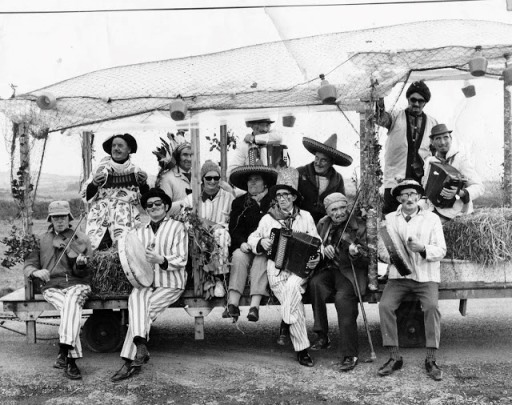
The wren-boy tradition on St. Stephen's Day is unfortunately, now nearly a thing of the past. Now, only a few small groups, or individuals carry on a tradition, the origins of which, are lost in the mists of time. In the time of the big batches of wren-boys, under the leadership of their King, these groups would traverse the country roads all day, and as evening and night approached, they would head for the larger urban areas to avail of the richer pickings in the public houses.

The North Kerry area was well catered for, with two large groupings in the Killocrim/Enismore and Dirha West areas, There was also a strong tradition in the Clounmacon side of the parish.

Some time after the wrens-day, it was the custom to organise a wren-dance. When the date was picked, a house offered to host the dance. The dances were all night affairs, with liberal quantities of food and drink provided.

In the early 1960's I spent three years in London, during which, I worked in a pub, The Devonshire Arms, in Kensington, for a year or so. At this time, The Harvest Festival Committee, under Dr. Johnny Walsh, organised the wren-boy competitions in Listowel. Mr Johnny Muldoon, of London, had met Dr Johnny in Listowel and told him that he would organise two dances in his Dance Halls in London, provided that the Listowel committee send over three or four wren-boys to be in attendance. During their stay in London, Dan Maher, who managed the Devonshire, invited the Listowel contingent to the pub. On the particular evening I was serving in the lounge bar. (the pub was a gathering place for many film and TV actors who would have lived nearby). Suddenly Dr.Johnny threw the double door open, and in came the Listowel wren-boys, led by the leader, Jimmy Hennessy. Jimmy, wearing a colourful pants, had only some fur skin over his shoulders and chest and a headpiece with two horns. The others followed, faces blackened, and wearing similar outfits, all beating bodhrans. To say the least, those present did not have an idea what was happening. To this day, I can hear the remark which one man, Sir Bruce Setan, (he, of Fabian of the Yard) at the counter said to the other, Christopher Trace (of Blue Peter fame), Blimey, they're coming in from the jungle. They will kill us all.

There was no one killed, and I think that Jimmy Hennessy enjoyed drinking pints of Guinness and pressing the flesh, surrounded by people he usually saw, only in the Plaza and Astor.

Listowel Wren Boys of Yester Year.

* * * * *

LACKEN COMMUNITY JUNIOR TRACTOR AND TRIKE RUN
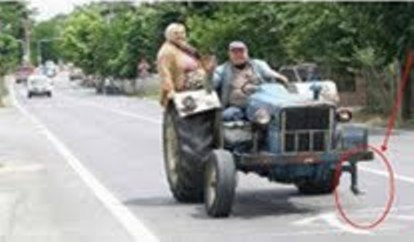
Our area of west Wicklow is a favourite venue for

Tractor Balance
Tractor Runs.
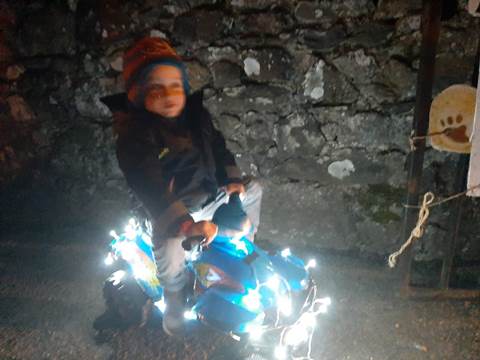
But on Sunday 29th December there was a new departure, The Lacken Community Junior Tractor & Trike Run. As night fell on the mild post-Christmas evening twenty five children decked out in colourful clothing took to the road with their mini tractors and mini trikes.

One Family Ready

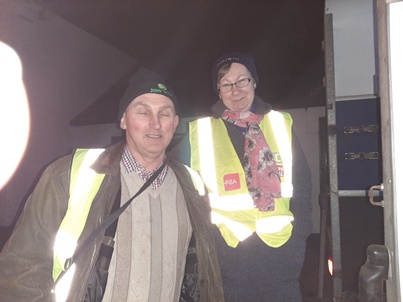
All vehicles were adequately lit and the event, which was organised by local man Theo Clarke, was well supervised by adult volunteers. Theo gives a big thank-you to, “everybody who helped out.”

Organiser Theo Clarke and his wife.

The event is described here by Diana Gallagher

On Sunday evening just after 6pm in the little village of Lacken, a rumble was heard, this was the rumble of plastic wheels against the normally quiet road. It was the first Lacken Kiddies tractor run!!!

Ready to go.

The pedal powered vehicles consisted of John Deere tractors, scooters, bicycles and go-karts, a few motorised vehicles took part also, but leg power proved the better as not all battery operated vehicles finished, as one didnt even start the run!!The adults shouted, encouraged and even pushed some of the kids towards the finish line!!

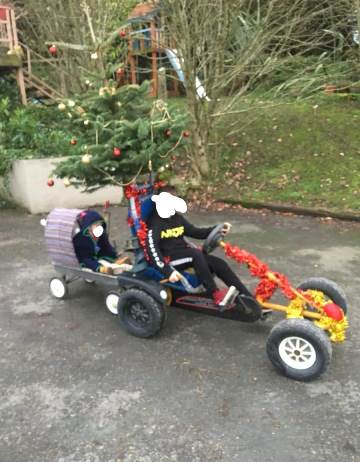
The Future on Wheels.

Each "vehicle" was lit up with Christmas lights, tinsel and some even had christmas trees attached!!

Well lit Lacken.

The registration only took a few minutes, and each child got a numbered sticker for their mode of transport. It was a great event, the craic was good and the kids loved it! They have seen plenty of tractor runs and now it was their turn to shine!! There was already talk amongst the kids of attending the run next year and so we look forward to a bigger Kiddies Tractor Run 2020.

* * * * *

Irish New Year Blessing
“Go mbeire muid beo ar an am seo arís.”
"May we be alive this time next year."
Have a great 2020. Don’t eat any yellow snow and I’ll see you in February.

Click on author's byline for bio and list of other works published by Pencil Stubs Online.