Friday, May 1, 2020

Editor's Corner


May 2020

"No one can pass through life, any more than he can pass through a bit of country, without leaving tracks behind, and those tracks may often be helpful to those coming after him in finding their way."
--Robert Baden-Powell.


The terrible virus that has impacted the world causing many areas to declare total lockdowns has apparently provided a new subject and the time to get things written down because we have the largest number of poetry submissions for one issue that we've had for several years. Some are actually comical, and some very emotional such as one not submitted to us but linked by our "Irish Eyes" columnist Mattie Lennon to the poem "When" by published author John O'Donnell imagining human reactions once the isolation periods are over.

Surprisingly, no Memorial Day tales, mentions, or poems arrived, so here are a couple of links to your editor's previously published tributes: "Memorial Thoughts" and "Memorial Days"


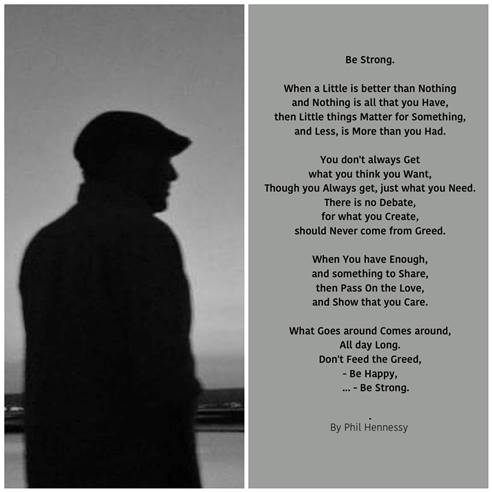
From Headway Bristol:"This has been sent to us by one of our former Service Users, reminding us all to Be Strong and happy 😊 We think it’s lovely! Thank you Phil Hennessy! — feeling blessed." (His poem was published in Pencil Stubs Online in the October 2015 issue.)

We are also feeling blessed because Phillip Hennessy sent us five poems for this issue, written while he is healing from a violent mugging awhile back. (The reason he was at Headway Bristol.) "Nothing," "I've Gone Without," "Memory Lane," "Carry On," and "Every Day," are his May poems.

Bruce Clifford has three poems: "Is It True," "Like No Other," and "We Turned Off The Sun." Bud Lemire sent us four poems: "Safety in Stores," "An Elevator Ride for One," "I'm Always With You," and "The Monster." He included pics for all but the one about the elevator. Mattie Lennon has one poem in his column and another, "There's A Brightness," in the poems category that includes a .wav link so you can hear John Hoban perform it.

John I. Blair's poems this issue are: "To Bloom Once Again," "Nothing Lasts," and "Books in The Background." Yours truly is showing two titles: "Isolation Diligence" and "Shedding Moments."

"Armchair Genealogy" by Melinda Cohenour, brings updates to the "Brick Walls" of family research plus exciting new data that may unravel some mysteries that remain.

Thomas F. O'Neill --"Introspective," is an update letting us know he is back on campus and includes a couple pics of him and his students plus a glimpse of building security measures in action. Marilyn Carnell discusses "What I have learned during the Pandemic" in her column "Sifoddling Along."

Judith Kroll ("OnTrek") with an injured knee keeping her preoccupied is absent while Mattie Lennon in "Irish Eyes," keeping his news gathering nose to the grindstone, reports on the status of various artists and pens a poem commiserating with the inactive status of a popular Men's Group that can be found in many communities in Ireland. Other artistic news and a joke or two with a classic John Fitzgerald circus poem keep us informed.

Rod Cohenour ("Cooking with Rod") joins wife Melinda (they refer to their shared cooking as "Cohenour Culinary Creations) to entice us to try their Southwest Beef Stew. LC Van Savage gives us a peak into her current writing experiences well laced with her brand of humor for "Questionable Advice" in her "Consider This" column.

Here's to Summertime, Mike! Whenever I think of you, I feel blessed and happy for our successful endeavor and your expertise, friendship, and support for this eZine.

See you in June.

Click on author's byline for bio and list of other works published by Pencil Stubs Online.
This issue appears in the ezine at www.pencilstubs.com and also in the blog www.pencilstubs.net with the capability of adding comments at the latter.

Armchair Genealogy


Still Tearing at the Mortar on those Brick Walls!


Perhaps every genealogist spends an inordinate time attempting to solve the mysteries that brick up those walls in every family tree. It occupies a great deal of one’s time, going over every clue, re-reading every bit of saved material seeking a new insight that just MIGHT lead to a name – a date – a document that PROVES the identity of a long lost ancestor. Your author has been poring over all those saved tidbits for the past two months, concentrating on the key mysteries that block a clear and uninterrupted line of descent for specific surnames.

This column is an update on the ongoing work dedicated to resolving those mysteries. In our March column, a list of key brick walls was created. Follows now the update for each.

 
Brick Wall One: William “P. R.” Joslyn:

This most frustrating mystery continues. Earliest confirmed parent to DNA match to my maternal uncle, Westcott Campbell Joslin, Sr. was Edward S. Joslin (who often spelled his surname “Joyslin” – believed to be tied to his New Jersey accent). Latest effort has been concentrated on flushing out the shadow tree begun for the relative with the same name (Lt. Col. Edward Swain Joslyn, a contemporary of our Westcott father who distinguished himself in the Civil War). Edward Swain Joslyn is undoubtedly of our line – but his exact relationship is as of yet not confirmed. This Edward S also fathered a daughter given the SAME name as our Westcott father – Harriet L. More to the point, he lived in Kaine County, Illinois – the birthplace for our William Henry Joslin, immediate Great-Grandfather to sister Mary and your author. The DNA matches. The missing brick – still missing.

Brick Wall Two: Earl Allen Carroll:

Excited to report we may have some promising news on this front. This very week a young Carroll male cousin contacted your author, concerning his own efforts to build his Carroll tree on Ancestry. We have begun a dialogue and, if this young man concurs, he will submit a DNA test to Ancestry linking his public tree. This will be the FIRST MALE CARROLL of our line to submit a DNA test. With any luck at all, his matches will be shared and we can work in concert to determine the parentage of Earl Allen Carroll – our earliest CONFIRMED Carroll ancestor.

Brick Wall Three: James Sylvester Anderson:

Since Earl Allen Carroll was wed to Laura Isabel Anderson (Guinn) Carroll, any shared DNA matches to our Carroll cousin will – likewise – help to track back to this ancestor. We know James Sylvester Anderson wed Nancy Jane Gilstrap and that he was a wagon maker. We know both James Sylvester and Nancy lived during the Civil War. There are a number of James S. Andersons listed as participants in that grievous War. Given his occupation as wagon maker, it is likely James was involved actively. We know their youngest child, our Great Grandmother Laura Isabel Anderson was born 8 April 1865, which presumes James was alive yet in late 1864 and had occasion to return home. The window for linking him to a Civil War casualty, therefore, narrows. By 9 June 1870, Nancy Jane Gilstrap Anderson had succumbed to an early death. We believe both parents were deceased by the enumeration of the 1870 Census as Laura and her siblings are living in the home of their grandfather, Jeremiah Milam Gilstrap.

Brick Wall Four: Mother of John Raymond Bradshaw, Sr.:

The arduous task of sifting through the records tied to the now-identified biological father of my first husband and the father of my children continues. Through an exhaustive task of scrutinizing DNA matches to a male grandson who kindly contributed his DNA, another shadow tree has been built. This tree concentrates on the highest shared centimorgan matches and their public trees. Tracing through each potential lead, adding to the shadow tree, evaluating dates and locations that might provide the clue is difficult at best. Oh, to have the resources of Who Do You Think You Are? and their team of researchers!

Brick Wall Five: Father of Roxanne Marie LeTourneau Bradshaw:

The same shadow tree referred to above is relevant to this search, as the grandson who contributed his DNA is descended from both John Bradshaw and Roxanne. Here again, the shadow tree compares Shared Matches to known relatives of Roxanne in order to eliminate those known biological relatives from the descendants of the potential father. This process will result in a unique tree for this grandson – separated from the massive overall tree that includes peripheral lines rather than direct blood lines.


DARE WE PRESENT A NEW BRICK WALL?

And, finally, a bit of fun. Tiring of all that repetitive work creating and tracing and poring over records related to brick walls that has occupied uncountable hours over decades – we decided to take a look at a line not explored in depth previously: Our WADE line.

Great-Grandmother Flutie Creek (Alexander) Kendrick was the daughter of Absalom Creek (first cousin to all of the Younger and first half-cousin to the Dalton gang members) and his first wife, Martha Ann Wade. I well remember sitting by beautiful Flutie’s bedside when yet a pre-schooler and asking, “Aunt Flutie (she always said – at age 90 plus – she was far too young to be my Grandma!), what was your daddy’s name?” She said very sweetly, “My daddy’s name was Absalom.” In the complete candor of a very young child, I replied, “That is a weird name! Absalom. What was your mommy’s name?” She replied, “My mother’s name was Martha.” “Martha? That is a very weird name, Aunt Flutie!” Silly, silly me.

The Marriage Records of Clay County, Missouri, 1852-1900; Three Volumes, Volume I document the marriage of Martha and Absalom thusly: Marriage Date: 12 Aug 1866, Name: Absalem Creek, Spouse: Martha Ann Wade. Officiator: T. Montgomery, M. G. Date: 15 Aug 1866.

The daughter of Peyton Wade (1808-1887) and wife, Elizabeth Wilhoite Wade (1814-1893), Martha, born in 1847, was the fifth daughter born to the couple. Peyton Wade was the son of John Wade (1784-1840) and wife, Prudence Ellington Wade (1788-1860). Peyton and Elizabeth were wed 26 Oct 1832 in Clay County, Missouri. Prudence was born in Amelia County, Virginia, the daughter of David Motley Ellington (his exploits in the Revolutionary War were covered in two sequential columns, May and June of 2016) and his wife, Mary Malone DuPuy (the ancestor who links our line to my 23rd Great-Grandfather, Hugues dePayens DuPuy: http://www.pencilstubs.com/Magazine/MagPage.asp?NID=5832.

Here is the new exciting research: John Wade (1784-1840) is shown by a number of our family researchers to have been the son of Col. Nathaniel Wade and his wife, Mary Taylor Wade. This Col. Wade was a close confidante of General George Washington and of the Marquis LaFayette. His heirs have published a letter handwritten to him by George Washington on the eve following Benedict Arnold’s betrayal, ordering Col. Wade to march “forthwith” to West Point with his troops and take control, expected to be called upon to defend the Fort West Point that very evening.

The vital document tying our John Wade to this distinguished Revolutionary War hero is contained among the papers known as The Douglas Register. This compilation is heralded as one of the most notable collections of vital facts for historians concerned with ancestors deriving from Colonial Virginia. Following is a description of the source document:

The celebrated Douglas Register is an indispensable compilation of births, marriages, and deaths covering the period from about 1750 to 1797, with some miscellaneous records going back to 1705. The registers are for the parishes of St. James Northam (Dover Church) and King William, but they concern individuals who were residents of the Virginia counties of Fluvanna, Goochland, Louisa, Orange, and Spotsylvania. Entries under the headings of births, marriages, and deaths are arranged alphabetically, with marriages broken into separate lists for husbands and wives. Altogether the entries exceed several thousand in number. The book further consists of lists of Huguenot settlers at Manakin-Town (King William Parish) and an index of Goochland County wills, 1728-1840, containing about 1,000 names with references to dates and locations. (The early records of Goochland County are inseparable from the early records of Henrico and Powhatan counties, from which Goochland derived.)

“The register is of particular interest since the mother’s name is shown in each birth entry. Since the records cover a period of almost fifty years and an area of considerable extent in central Virginia, the book is of wide usefulness.”–The Virginia Genealogist (April-June 1967)

And, the notation which many family historians believe tie our John Wade (1784-1840) to the illustrious Col. Nathaniel Wade? “The Douglas Register: Nathaniel Wade & Mary Taylor, a son, John, born Mar: 7, 1784. Baptized May 30, 1784. p. 111”

Of course, we do not merely attach names to our tree without in depth research to identify vital documents that make sense. Did the person actually live in the same area where our ancestor is reported to have been born? Are the years correct? Do we have absolute documentary proof? A Bible listing, a Census record, a Will? Therefore, our new project is to scour records online in an attempt to prove or disprove this connection. Exciting, yes?

To this end, every Wade record that appears to be related is being reviewed. One detailed work is “The Wade Genealogy” by Stuart C. Wade, published in 1900. Mentioned in that book are but a few of the distinguished Wade personages throughout the centuries, the underlined name is the cornerstone of our current research:

“A family which has produced Armigel Waad, Secretary of the Privy Council to King Henry VIII Of England and one of the first English men to land in America; his son, Sir William Waad, who had so leading a part in the colonization Of Virginia, and whose activity as Lieutenant Governor of the Tower of London procured for him the epithet of “that villain Wade, from his prisoners, Sir Walter Raleigh and Cobham; Colonel Nathaniel Wade, the ill -fated Monmouth’s companion at Sedgmoor; Field Marshal General George Wade, Commander—in Chief of the British Army in early Georgian days and builder Of the famous Highland Roads; Colonel Nathaniel Wade, of Massachusetts, who held West Point the night after Arnold’s treason and who was the friend and confidant of Washington and Lafayette…”

Thus, we embark on another month’s cruise pursuing Armchair Genealogy. Stay tuned. We hope to have exciting news in our next column. In the interim, please take advantage of this historic and often frightening period of social isolation to pursue your own family history.

Click on author's byline for bio and list of other works published by Pencil Stubs Online.

Cooking With Rod


Mexican spices are universally renowned and loved for providing exquisite flavors to just about any meal imaginable. This stew that M and I concocted turned out to be one of the most wonderful combinations of foods.

It is hearty.


It is healthy.


And, above all else, it TASTES GREAT! 


Have fun with it. 


Bon appetit~!

Southwest Ground Beef Stew


By Cohenour Culinary Creations

Ingredients:

    * 2 lbs. low-fat ground beef
    * 2 pkgs. Taco seasoning mix
    * 1 tsp. ground black pepper
    * 1 Tbsp chili powder (add later per instructions)
    * 1 large onion, diced
    * 1 large bell pepper, 1" chunks
    * 2 large potatoes, diced in large 1.5" chunks
    * 2 large carrots, diced
    * 1 (14.5 oz) can black beans, drained
    * 1 (15.5 oz) can pinto beans
    * 1 (14.5 oz) can whole kernel corn, drained
    * 1 (14.5 oz) can fire-roasted tomatoes, diced
    * 1 (32 oz) can tomato juice, low salt
    * 1 (32 oz) container beef stock, low or no salt
    * 2 large Poblano peppers, roasted, peeled, deveined, deseeded, diced into large chunks

Garnishes, optional choices:

    * Tortilla strips
    * Flour Tortillas, warm
    * Chilled butter
    * Corn bread, plain or Jalapeno
    * Sour cream
    * Grated cheddar, Monterey Jack, or Mexican Blend cheese
    * Cilantro leaves, chopped
    * Radishes, whole or sliced, chilled
    * Green onions, chilled
    * Bell pepper strips
    * Guacamole
    * Pico de Gallo

Instructions:

  • 1. Brown ground beef over medium heat in skillet, stirring with wooden spoon to break up. Sprinkle taco seasoning mix evenly over the browning beef. Stir well. Sprinkle with ground black pepper, stir well. When evenly browned, remove beef to waiting large 8 qt. stew pot, using slotted spoon.
  • 2. Add to same skillet (without cleaning, using retained juices and crumbles) the onion and bell pepper. Cook until onion is transparent. Add to stew pot. Be sure to add all the scrapings from the skillet. Using very low fat beef means little grease but a flavorful addition to your stew.
  • 3. Add potatoes and carrots to stew pot. Turn burner on to medium high to begin the simmering stage. Stir well.
  • 4. Add canned vegetables, tomato juice, and beef stock. Stir well.
  • 5. Add chili powder and stir well. Continue cooking stew, stirring occasionally to prevent scorching. Cook until potatoes and carrots are tender.
  • 6. Add poblano pepper to stew. Reduce heat to medium. Allow to simmer for about 20 minutes, stirring occasionally.
  • 7. Serve with your choice of suggested accompaniments or garnishes.

A crisp salad and iced tea or lemonade make a great meal.

Click on author's byline for bio and list of other works published by Pencil Stubs Online.


Sifoddling Along


Things I have learned during the Pandemic

In this time of epic changes in our lives, I can only focus on small things that are within my control. I have been confined to my house since March 7 and don’t see escaping in the foreseeable future. I live in Minnesota and so far, we have not experienced anything like New York and other large cities in the US, but we have had a lot of snow. Go figure

So what have I learned?

I have learned that it is possible to be alone for long periods of time, but it is necessary to connect with others. For the first time in about 30 years, I don’t have a pet to indulge and this is not the time to acquire one, though it would be nice to have a cuddly companion.

The first thing I learned was how nice the app Zoom is. I have used FaceTime to keep up with family and friends but Zoom allows groups of people to “meet”. So far, I have Zoomed (yes, it has morphed into a verb) with my sewing group, my book club and social hours with members of my church. It is wonderful to feel connected to others, even in personal isolation.

Next, I learned how to make masks for others. As I said last month, I can manage to make a simple task complicated. Not only did I manage countless mistakes, I managed to run my serger into a pin and wrecked it. For the second time, I slipped away from my house to get it repaired while maintaining the proper distance from others. That wasn’t easy as when I picked it up 3 days later, the clerk forgot to include the cord. In all, it took 3 hours of driving time to get my sewing projects back on track. Another slow down was my search for the “best” mask. I finally decided it was the pattern from the University of Minnesota https://twin-cities.umn.edu/…/diy-face-masks-during-covid-19.

The best thing was the discovery of Dalgado (whipped) coffee. It has been immensely popular in the last month as people have time to experiment in the kitchen.

It is incredibly simple: 1 tablespoon each of instant coffee, sugar and hot water.

Mix or whip until it forms soft peaks and use it as a topping for hot or icy cold milk. It is delicious and since it is the equivalent of three cups of coffee, wakes me right up.

Now we face months of wrenching changes in our lives. This morning (April 17) to paraphrase Governor Cuomo: if something is destroyed, we must build it back better. I like that attitude.
We must all work together to make this a better world. My best wishes to all.

Click on author's byline for bio and list of other works published by Pencil Stubs Online.

Irish Eyes


Pat Ingoldsby in Russia and More

The question is often asked in the past few weeks why has Ireland been less affected by Coronavirus than the UK, USA Spain, Italy and other countries? This is what Stephen Clandillon, Head of Mapping at the University of Strasburg has to say about it, "Perhaps the answer lies in a responsible, non-populist, care-taker leader who is a doctor in medicine and who took the whole thing seriously. Ireland implemented measures ahead of the curve and therefore cut it off earlier than others. The Irish are still listening to experts who throughout the recent years have been listened to far more than elsewhere." It would appear that we are world leaders once again.

* * * * *

      It has long been said that every man needed a shed as a place of refuge where he could retreat for a few hours, mess around at DIY jobs of his own choosing, or simply sit on a stool or box and contemplate the meaning of life. This has changed in Ireland and even further afield. Now nearly every village in Ireland has a Men’s’ Shed where groups of men who can come together in communal 'sheds' to work on a project, learn a new skill or simply spend time together.


      There is a group in Ireland which I won’t attempt to describe to you because I couldn’t do it justice. It is Irish Men’s Sheds Group and here is what Gerry Walsh has to say about it, “We have decided to make our group public to enable the content to be shareable. Feel free to spread the word with your shed mates to come join us. If you’re not in a men’s shed and want to help start a men’s shed to get in touch- we have the experience of doing the heavy lifting when it comes to starting men’s sheds - having helped start hundreds men’s sheds in Ireland since 2010.”

      And here is the link: https://www.facebook.com/groups/menssheds/

 
RHYME OF THE ANCIENT SHEDDERS
By Mattie Lennon

Were you born since nineteen fifty four?
Then listen to my tale.
Since now I can’t go past the door
It’s worse than being in jail.

The Men’s Shed basks in silence now
Dead ashes in the grate.
The powers that be will not allow
Us meet or congregate.

Trips to historic places
Postponed till God knows when
And absence of the faces
Of jolly Men’s- Shed men.

Restrictions with good reason
Our precious lives to save,
But it’s Limbo land this season
No wooden beams we’ll shave.

Sans banter, cakes or mugs o’ tay
The shedders felt marooned
Spin-doctors soon came into play
‘Twas simply called “cocooned.”

The sound of saws and lathe no more
No smoke or leaping flames.
We miss the sawdust on the floor
And elders calling names.

No forty verses now from Jack
Or the Micks with Niall and Noel.
No poems or songs or mighty craic
To elevate the soul.

Poor remedy for culture shocks
Are Zoom and mobile phones.
We’ll have to take our stumbling blocks
And make them stepping stones.
©2020 Mattie Lennon

* * * * *

      For generations the coming of the circus to town was a welcome event. Because of the lockdown it won’t be happening in Ireland this year. The following poem was penned by Listowel native John Fitzgerald.
 
JOHN DUFFY, THE CIRCUS
By John Fitzgerald

Out from the pastures in early Spring
On trucks and on trailers, the loading begins
The tents and the tigers, the bright coloured ring
John Duffy, the circus is callin’

Travellin’ the highways and tourin’ the towns
Ringmaster, jugglers, the cats and the clowns
The posters are printed so word gets around
John Duffy, the circus is callin’

They drive the long nights without any sleep
Wire walkers, tight ropers, all hands to the wheel
Each dawn a’peggin’ the circle of steel
John Duffy, the circus is callin’

They ring round our market, wagons galore
Tractors and trailers, the canvas and more
With riggin’ and cages, ropes by the score
John Duffy, the circus is callin’

Four beats to a bar, the sledges ring
Four men of iron their music to sing
The canvas is spread,” the heave-ho” begins
John Duffy, the circus is callin’

It’s haul down the ropes, and let the tent rise
Like clockwork they know, each cog to prise
They heave and they haul ‘til the tent is full size
John Duffy, the circus is callin’

The brass band of old is pipe music new
Monkeys are scarce and the elephants few
The trapeze has nets and the safe rope has too
John Duffy, the circus is callin’

The circus, alas, is not that of old
The magic, the music, the laughs and the roars
See a child’s face when the sparkle’s gone cold
John Duffy will soon not be callin’

* * * * *


      Before the total lockdown I attended a wake in what is known locally as “the Latin-quarter of Ballinastockan." A female mourner lamented, “Poor Miley has gone to his eternal reward after decades of celibacy.” I knew that Miley was married and had several offspring and since I left school two days before my fourteenth birthday the lady’s statement was a conundrum that I wasn’t in a position to solve. Luckily enough I was seated beside an erudite gentleman who was married to a local woman. He could see my confusion and explained, “Celibacy can be a choice in life, or a condition imposed by circumstances. While attending a "Harmony for Couples" weekend, in Naas, Miley and his wife Kate listened to the instructor declare, "It is essential that husbands and wives know the things that are important to each other."He then addressed the men, "Can you name and describe your wife's favourite flower?" Miley leaned over, touched Kate’s arm gently, and whispered, ‘It's Odlums, isn't it?’ Thus began Miley’s life of celibacy."

* * * * *


      The link here is to a poem "When" by John O'Donnell whose collection of short stories, "Almost the Same Blue," will be published by Doire Press in May. Dedalus Press published "Sunlight: New and Selected Poems" in 2018. https://blogger.googleusercontent.com/img/b/R29vZ2xl/AVvXsEgQKpUUp09WS911s0Jp9VVLPPr5DLNiMZeMsHUGggiTb4T4R59XTI_9vP4bkPKNB7NHwRfaXdTAdq5zoDcfxXJpGQy1zmhXyGIDb10teUZ5D5J4NHQpTCYE6WgQmW6eIbEMB3ZnEX6XS4o/s640/when.jpg

* * * * *


I ate my way through last week,
As I waited for covid to peak
I must try harder
To bypass the larder,
Or I’ll never regain my physique.


      Róisín Meaney wrote the above and then a few days later she turned over a new leaf and wrote the following:

The start of a new lockdown week,
And a better plan for my physique
I’ll yoga like crazy
I’ll stop being so lazy
And of chocolate, you won’t hear a squeak.

* * * * *


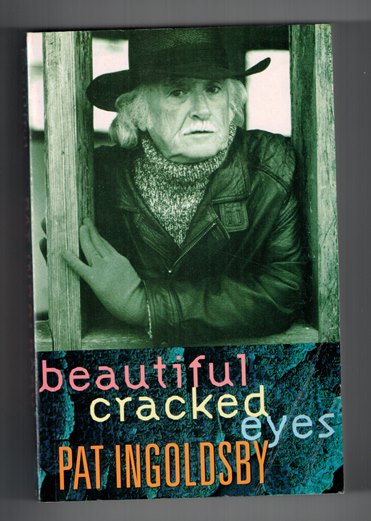
      I recently told you about a forthcoming documentary of the Dublin poet, Pat Ingoldsby. Well there’s more good news for Pat. His book of poems "Beautiful Cracked Eyes" has been translated into Russian and published in the land of Leo Tolstoy. Pat is delighted and there is another one of his works "The Peculiar Sense of Being Irish," being translated right now about which more anon...


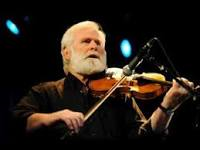
      John Sheahan of “Dubliners” fame will be 81 on May19th . He just recorded his first solo album Flirting Fiddles. It has been described by one critic as, “A revelatory collection to be relished as a long player.”

* * * * *


      Before Covid19 struck I told you about the planned Dolly Parton Lookalike day in Listowel. Well Billy Keane, hardly ever stuck for an alternative, put the following post on Facebook; “As Dollyday is postponed to 2021 we had a bit of fun today, with #bakeforkerryhospice please click the link to donate, every little (amount) helps this worthy cause.“ https://give.everydayhero.com/ie/dollybakeforkerryhospice

      See you in June!


  to view larger photo.

Click on author's byline for bio and list of other works published by Pencil Stubs Online.