Tuesday, December 1, 2020

Editor's Corner


By Mary E. Adair

December 2020

“The color of springtime is in the flowers;
the color of winter is in the imagination.”

- Terri Guillemets.


So did anyone suspect we would have the year that has occurred in 2020? Have a lot of us been doing the "Chicken little" in our remarks and forebodings? Have you been numbered among those who decided if they didn't admit it, it wouldn't be happening? How many of us have done this ostrich bit?


More to the point, how many of us feel we should be initiating an old fashioned diet because we over indulged for the Thanksgiving feasts? Or perhaps we have been using food as our comfort go to during isolation and quarantine periods. Well, now Christmas is around a very close corner and we have lots of traditional treats coming up. I will be like Scarlet O'Hara and think about it tomorrow - one of the January tomorrows, probably.


On a personal note, the poem "Tiny Miracle" by yours truly was in the first Pencil Stubs Online issue in 1999, and in a few years since, but there was no hesitation in having it again this year. If you've never read it, please do.


Other poetry for this issue includes a couple by Bruce Clifford - "It's Never Quite Clear" and "Are We Ready." Walt Perryman's poem "Points to Ponder on Monday Morning" is good advice. Phillip Hennessy, who said lockdown in England gave him time to pursue composing music also whipped out a new poem titled simply "2020."


"Virtual Reunion" and "Damaged Dogwood" are the two compositions from John I. Blair. Bud Lemire sent in three poems: "I'm Everywhere," "Become Anew," and "This Year."


Marilyn Carnell in her column "Sifoddling Along" is"Dreaming of Christmas Past." Mattie Lennon, in "Irish Eyes" titled his December Irish Eyes column "Rebel Songs, Men's Sheds and A Memoir." Judy Kroll's column "On Trek" reminds us what thankfulness really is when put in action. Thomas F. O'Neill in his column, "Introspective" speaks of Yuletime in different parts of the world. John Blair in "View from My Back Steps" gives a run down of what it takes to keep his personal view populated with birds and animals.


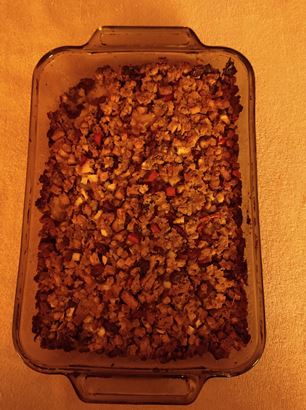
"Armchair Genealogy" begins on the genealogy of husband Rod Cohenour's family, with more info promised in future issues. "Cooking with Rod" tells how to create new favorites when key ingredients have to be substituted using a tasty fruit filled dressing as his example.


The article is by Thomas F. O'Neill who answers an oft-asked question, "What Does He Do for Entertainment in China?"


To Mike Craner, Webmaster and co-founder of this eZine, without whom there would be no "online" production of this eZine, may your Holidays be filled with light and love!


We will see you in January!


Click on author's byline for bio and list of other works published by Pencil Stubs Online.
This issue appears in the ezine at www.pencilstubs.com and also in the blog www.pencilstubs.net with the capability of adding comments at the latter.

View from My Back Steps


By John I. Blair

FEEDERS AT SIX O’CLOCK!

Every morning my day begins at the same time in the same way. My clock radio goes off at 6:00. Not with soothing sounds from the local classical music station – that would just soothe me ever deeper into whatever dreams I might be having – but with a raucous electronic klaxon beep that starts loud and gradually gets louder and louder until I have to struggle upright, stuff my feet into my sneakers, stagger over to the radio (which I purposely keep completely out of reach from the bed) and punch it into silence. By then I’m awake and shod and vertical, so I keep moving.


My first task is to take a couple of prescriptions that have to be ingested into an empty stomach. Then I make my way to the nearby kitchen where I scoop a big plastic jar full of cheap cat chow from the 22-pound bag I keep by the refrigerator. (I keep it there mostly so that it’s out of the road and I don’t fall over it during the day.)


After grumpily greeting my indoor cats (Gracie, Georgie, Zander, and Miss Kitty) I work my way out to the big sliding glass doors that open on the patio area. And I’m being waited for there, although any given day I don’t know whether my patient figure will be Patio Cat (a tuxedo with a sweet disposition) or Blackie (a coal-black cat with a combative personality).


The other two cats in the current tribe on the patio are much shyer of me, but I know they are around somewhere – Miss Perky Whiskers (another tuxedo) and my newest whom I’m calling “Fat Blackie” because he looks like Blackie might if he compulsively overate every day.


My first task is to fill each of two bowls to the brim with kibble. The Big Blue Bowl (which dates back to when we had 40-pound Keeshond dogs to feed in the kitchen) resides under an improvised shelter out on the patio, protected from rain and wind in the winter, sun and wind in the summer. The Bright Shiny Bowl (which is part of a set I bought years ago for indoor use but which like the Big Blue Bowl has the desirable asset of being virtually unbreakable) perches on the top step, under the eaves and next to the glass panel the door slides across, gives a backup for shy cats who might be easily bullied by either of the Blackies.


Kibble being provided, my next task is to wrestle a stiff and heavy garden hose over to the water basin I keep next to the bird feeder pole, dump the stale, soiled water from overnight, rinse, then fill with fresh, clear water for the day’s demands. Many critters depend on this basin (and in summer I provide two basins). Not just birds, although technically that’s why I keep it there. But also all the cats, the possums, the raccoon family that roams the entire block, the squirrels who live in the pine tree across the back fence, and who knows what else.


And if it’s been dry weather, after the basin is refreshed I water all of the herd of potted plants I keep on the patio, some of them there for as long as ten or more years. Mostly flowers, but there are still some fennel and rosemary plants I keep for fragrance and for butterfly caterpillars.


Ordinarily then I’m back in the house and back to bed for at least a few more hours. But a couple of mornings a week it’s time to refill the six bird feeders (seven in the summer when I also maintain a nectar feeder for hummingbirds).


In that case I’m out to the garage, where I pop the heavy lid off a big galvanized trash can and scoop a big pailful of sunflower seeds out of the open bag stored in there (to protect it from vermin). Then out on the patio again.


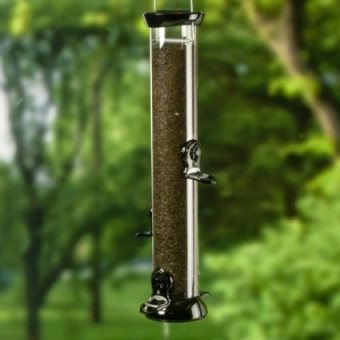
Each feeder (of varying age and condition) is a (commercial plug here) Droll Yankee tubular feeder from (oddly enough) Denver, Colorado. Droll Yankees are widely known as “The World’s Best Bird Feeder”, which is not an exaggeration. They’re expensive, but they’re worth every penny, because they pretty much last forever. I keep six and haven’t had to buy a new one in several years despite heavy and rough use. They are NOT squirrel-proof in the sense of keeping squirrels out, but they are squirrel-proof in the sense that squirrels do not destroy them (a fate suffered by just about every other feeder I’ve tried over the 50+ years I’ve been feeding birds).


They keep the seed dry and available and are simplicity to refill.


Lots of people feed a mix to their bird dependents, and that’s fine. But I don’t care for the host of volunteer grasses and such that always grows under a feeder with generic feed contents, so I use straight black sunflower seeds. Everybody likes them (or at least all the seed eaters) and any volunteer plants are easy to pull up or can just be allowed to grow and flower. Which they often do.


If I don’t fall down, it takes me about 5 to 10 minutes max to refill those six feeders (a couple of which hang from my house eaves and the other four from a tall metal pole at the edge of my patio). And then I’m good for 3-5 days of watching pleasure.


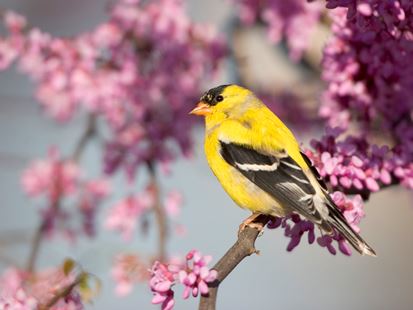
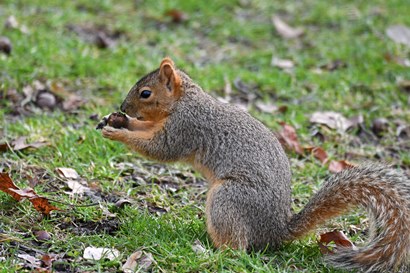
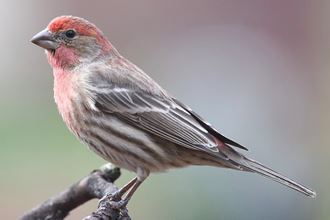
Besides the squirrels (30 generations of whom I have supported at this house alone) I reliably get northern cardinals, purple finches, English sparrows, chickadees, tufted titmice, whitewing doves, and bluejays. In season I get goldfinches, redwings, grackles, and a few local rarities like juncos and grosbeaks. And the crowd of birds makes other, non-seed-eating species feel comfortable coming around, like wrens, robins, and mockingbirds. For some occasional excitement, the bird crowd may also attract a hawk once in awhile. That’s the risk you run when you’re a bird.


Possums and raccoons like to search the pile under the pole for seeds that have been missed, but their chief interest is the water basin and checking the kibble bowls for leftovers. Those bowls are always licked clean by dawn.


My obsession with birds and other critters can be a bit expensive; it definitely produces a messy patio; and it reliably interrupts my night’s sleep. But it keeps me connected with the natural world around me and constantly entertained and learning new stuff. And what’s the down side to that?


Click on author's byline for bio and list of other works published by Pencil Stubs Online.

Armchair Genealogy


By Melinda Cohenour

The Cohenour Line


      My husband is Rod Cohenour. He is descended from a long line of Cohenours with an intriguing past, many interesting characters, and so many stories! This is a new series, undertaken with the desire to capture his family history (which is now, of course, MY family history as well). This first installment will merely cover the bases: his direct ancestral lineage and the earliest known patriarch of that line.


The Name – in all its variations: (It has been said the Library of Congress recognizes at least 64 various spellings of the surname COHENOUR attached to the same genetic family line.)


      The family originally spelled the surname Gochenour according to my best research. In the Alsace-Lorraine region of France, “Goch” meant hill. “Gochen” referred to people who lived on the hill. “Gochenour” referred to people who formerly resided on the Hill but had removed to another location. Thus, per this version, Rod’s family became the Gochenour folks.


      Other meanings ascribed to the name Cohenour include this reference to one of the original variant surnames: Gochenauer.


      “Americanized spelling of Swiss German Gauchenauer, a habitational name from a place named Gauchenau, named with Alemannic gauch(e) 'cuckoo', 'fool' + au 'water meadow' (Middle High German ouwe). Similar surnames: Cochenour, Ridenour, Gochanour, Gochenaur, Gochnour, Cohenour.”


Given this meaning, it would appear the family may have been associated with the husbandry of water fowl (geese?) in a high meadow pond or lake. Interesting.


      With the extensive accepted spellings of this family’s surname, the meanings ascribed thereto must be equally as formidable. Here, for example are a few of the accepted spellings as listed by William A. Gouchenour, Jr. in the family newsletter “The Trail Seekers” he formerly published:


       Cnowers, Cocannouer, Cocanougher, Cocanour, Cocanower, Cochanauer, Cochenheim, Cochenauer, Cochenaur, Cochenour, Cochnauer, Coconer, Coeghnower, Coghanour, Coghenower, Coghrican, Cohener, Cohenhour, Cohenour, Cohnour, Cohonoor, Cokenouer, Cokenour, Coconaugher, Cokonougher, Connour, Conour, Couckenauer, Coughanour, Coughenour, Coukenhour, Gaachanuwer, Gaachenauers, Gachenauwer, Gachennouwer, Gachenower, Gachnauwer, Gachnouwer, Gachnower, Gacughenower, Gauchenauwer, Gauchnour, Gechnauer, Gocehnauer, Gochanauwer, Gochaneur, Gochanour, Gochenauer, Gochenaur, Gochenour, Gochenouwer, Gochnauer, Gochnour, Gockenaur, Gockenuer, Gogghnour, Gognour, Gognouwer, Gognower, Gouchenour, Goughenour, Goughnour, Kegechower, Kegenhower, Kerschner, Kochenauer, Kochenouer, Kochmour, Kochnouer, Kockemohr, Kockemoor, Kockenouer, Kocknower, Kognauwer, Kohenor, Kokanour, Konouar, Konour, and other variant spellings.


The Heritage – The earliest ancestor your author has been able to find was documented in a family history book compiled and written by Debra Kay Cohenour entitled, simply, “Cohenour History.” She indicates the earliest known ancestor was named Basthli Sebastian Gachnouwer or Gachenower:


      BASTHLI SEBASTIAN GACHNOUWER I was born on 20 Jan 1543 in Goch, Germany . He married ADELHEIT HEIDI HUBER before 1565. She was born in 1538. Basthli Sebastian: Basthli Sebastian Gachnouwer I was also known as Basthli Gachenower. Basthli Sebastian Gachnouwer I and Adelheit Heidi Huber had the following children: i. GEORGE GACHNOUWER . He married MARIA WEBBER in 1589. ii. ANNA GACHNOUWER was born on 1 Jul 1565 in Fischenthal, Zürich, Switzerland. Notes for Anna Gachnouwer: The Parish of Fischenthal is located in the southeast section of Canton Zürich. This Parish has kept a register where the births, marriages and deaths of many parishioners are listed. The record, as many ancient records, is not complete nor perfect. They are said to date back to 1546 although the earliest Gachnouwer record is the Baptism of Anna in 1565. iii. SEBASTIAN GACHNOUWER II. He married ELIZABETH PFENNIGER in 1586 in Fischenthal, Zürich, Switzerland.


The above-referenced George (Jorg) Gachnouwer (who wed Maria Webber) is said to have fathered eleven children; however, no complete record of those offspring has been found. The only documented child of that union was Jacob Gachnouwer, born 1600 in Zurich, Switzerland, where 28 May 1624 he wed Margaretha Peter, daughter of Jorg Peter and (wife) Barbara Meyer Peter. This marriage was a critical milestone in the history of the Cohenour family for her parents were among the very first converts to the Anabaptist faith in Switzerland back in 1522. Jacob converted to the Anabaptist faith thus sealing the fate of himself and, later, his descendants. The story as told by Debra Kay Cohenour reads as follows:


      Jacob Gachnouwer was born about 1600. Jacob is the first member of the family known to be converted to the Anabaptist-Mennonite Faith. He became engaged to Margaretha Peter on 07 May 1624 in Fischenthal, Zürich, Switzerland. This fact is known because on that day a great argument was noted in the Church records. Jacob and Margaretha wanted to be married but the Catholic Church required that they wait two weeks. The Catholic Church was the State Church. Apparently the Priest and Jacob had words. They married on 28 May 1624 in Zürich, Switzerland. Margaretha's family had been followers of Menno Simons since the beginning of the sect in 1522. In the years that followed, the Catholic Church records have many entries referring to Jacob as the "bad Anabaptist". Jacob would not allow his babies to be baptized. They were taken from him and baptized by the Priest with good Catholic sponsors from the community. Jacob was well aware of the penalties for his beliefs as many fellow believers had been hung, beheaded, drowned, or burned at the stake in Zürich. He was put into prison between December 1638 and July 1641 at Othenbach Convent Prison. His wife was exiled; his children became wards of the State, and his farm seized. His wife relocated to Alsace, France with the Anabaptist's Mission there. His eldest daughter, Elzbeth, had married a Catholic, Hans Kagi. They purchased the farm from the State and took in the three youngest Gachnouwer children. Other children were placed in Catholic families as apprentices. Upon his release in 1641, he was exiled. However, he returned to Zürich to gather his children and was captured. He was again imprisoned in 1644. The guards mistakenly released him after the Treaty of Westphalia was signed. They must have thought he was a Protestant. He moved what members of the family he could find to Ohnenheim, Bas-Rhin, Alsace, France in 1649.


      Thus, the Cohenour family immigrated to Alsace, France, seeking a safe and secure homeland in which to practice their faith. This haven, however, would soon become the Hellhole that nearly wiped out the entire line.


      From Wikipedia, we find: The Swiss Brethren are a branch of Anabaptism that started in Zürich, spread to nearby cities and towns, and then was exported to neighboring countries. Today's Swiss Mennonite Conference can be traced to the Swiss Brethren.
In 1525, Felix Manz, Conrad Grebel, George Blaurock and other radical evangelical reformers broke from Ulrich Zwingli and formed a new group because they felt reforms were not moving fast enough.
Rejection of infant baptism was a distinguishing belief of the Swiss Brethren. On the basis of Sola scriptura doctrine, the Swiss Brethren declared that since the Bible does not mention infant baptism, it should not be practiced by the church. This belief was subsequently rejected by Ulrich Zwingli. Consequently, there was a public dispute, in which the council affirmed Zwingli's position. This solidified the Swiss Brethren and resulted in their persecution by all other reformers as well as the Catholic Church.
Because of persecution by the authorities, many Swiss Brethren moved from Switzerland to neighboring countries. The Swiss Brethren became known as Mennonites after the division of 1693, a disagreement between groups led by Jacob Amman and Hans Reist. Many of the Mennonites in France, Southern Germany, the Netherlands and North America, as well as most Amish descend from the Swiss Brethren.


      The Cohenour History recites the following: “Heinrich Gachnauwer is the only known family member to survive the slaughter of Anabaptists in Alsace, France that occurred about 1670. He escaped to Heidelberg, Germany where his son, Joseph Gochenour, was born in 1677. Joseph married Frena Musselman in 1725. She passed away before 1732, perhaps the victim of war.”


      This is my husband’s line. The next chapter in this series will trace Joseph’s descendants as they make their way to America where they continued to adhere to their strong beliefs and dedicate themselves to the pursuit of freedom, honor, integrity, and family.


Click on author's byline for bio and list of other works published by Pencil Stubs Online.

Cooking with Rod

By Rod Cohenour

There's an old saying that necessity is the mother of invention. This recipe is a perfect example of just that. When we discovered I had forgotten to buy the oranges we typically use in our dishes at Thanksgiving, my creative spouse decided to use pineapple in this dish. The result was ..


WOW! This is one version everyone who loves Dressing will enjoy. We actually agreed it was the BEST dressing we'd ever served.


Bon appetit~!

Pineapple-Cranberry-Pecan Dressing


Ingredients:

  • 3 pkgs. Stovetop Everyday Stuffing Mix (with dried chicken included) See Note below.
  • 1/2 LARGE onion (about 1 cup)
  • 1 Bell Pepper (red, yellow, orange, or green), diced small
  • 5 or 6 stalks celery, with leaves. Remove strings, cut broad ends lengthwise to permit a small dice
  • 1 cup craisins (dried cranberries)
  • 1 cup pecan pieces
  • 1 can (14.5 oz) pineapple chunks including juice
  • Nonfat Chicken Broth (32 oz)
  • 1-2 tsp. Dried Cinnamon
  • 1-2 tsp. Black Pepper
  • 1 cup butter, cut into ½ to 1 tsp size and dotted on top of mixture, fold in
  • NOTE: Checked the boxes remaining in our pantry (Stovetop Stuffing Mix for Chicken) and the can plus box equalled 24 oz. total


Instructions:

    1. Prepare two (2) 11” x 9” oven-proof casserole dishes. Butter thoroughly to facilitate removal of dressing.
    2. Use a large bowl to prep dressing ingredients.
    3. Gently fold all ingredients for dressing so there is an even mix throughout. Add broth in small increments so that moisture level is to your preference. Remember, the more moist a mix going in means a more compact and moist end result. We prefer our dressing a bit more like a hot bread with a drier texture. (If you need to adjust liquid for a more compact, moist dressing, add more broth or even water.)
    4. Bake at 325° for one hour. To prevent too much browning on top or bottom, you can switch pan locations from bottom to top shelf in the oven halfway through.
    5. Serve warm.

Click on author's byline for bio and list of other works published by Pencil Stubs Online.


Introspective


By Thomas F. O'Neill

It can be extremely difficult especially with the coronavirus pandemic to maintain an upbeat and positive attitude during these trying times in America. Especially, with the rise in coronavirus cases and deaths in US hospitals.


That being said, I still love to teach my students about this special thanksgiving season it is the season of giving in America. The world can learn a great deal about the value of being thankful for what we have in life and the special people in our lives.


I conduct a lesson every school year about the history of thanksgiving and its meaning and importance for us Americans.


I like to explain to my students that being thankful is a powerful affirmation it brings more of what we want into our life. When we are thankful for the things, we have, we will attract more goodness into our lives and the lives of those around us.


The yuletide season is once again upon us with all the hustle and bustle of mad shoppers. I for one will not participate in the frenzy of Black Friday like millions do in America and I never will.


I am one of those people who simply enjoys the sharing and to give thanks for the special people in my life. That truly makes this time of year special for me because I surely have plenty to be thankful for. Throughout my life people have gone out of their way to be kind to me and I like to tell my students in class when you care for others you are cared for and when you love others you are loved. This special season of giving should reveal our love for one another through kindness because loving kindness gives this special season its true meaning.


There was a time though when I felt the season of giving was simply a common courtesy to receive and provide our significant others with material gifts. I now understand more clearly that this special season is for heartfelt acts of gratitude for having people in our lives. When keeping the true spirit of giving close to our heart it enables us to give from the heart all year- round.


The yuletide season should be a time when our love comes to call because that love gives this time of year its true meaning. I have found over the years, though, that it's not the material gifts that count in life but rather it's the unrecognized, undetected, and unremembered acts of loving- kindness that are our greatest gifts and achievements in life.


If we truly want to see a world of loving and joyous people, we must be loving and joyous toward the people in our own lives. That potential is part of our humanity.


When we reach out and touch others, we touch a part of the humanity that is within us. When we enhance the life of another in need, we in turn enhance our own lives.


Objects gift-wrapped in shiny paper can be forgotten over time, but kindness whispered to those in need will echo endlessly throughout the community. Those small acts of kindness resonate with the giver and the receiver because they are gifts from the heart. Such priceless gifts can never be measured monetarily though because how can you put a price on love?


From my heart to yours I would like to wish all of you a very joyous holiday season.

Always with love from Suzhou, China
Thomas F O’Neill
    Phone: (800) 272-6464
    WeChat: Thomas_F_ONeill
    U.S. Voice mail: (410) 925-9334
    China Mobile: 011 (86) 13405757231
    Skype: thomas_f_oneill
    Email: introspective7@hotmail.com
    Facebook: http://facebook.com/thomasf.oneill.3/

Click on author's byline for bio and list of other works published by Pencil Stubs Online.