Monday, February 1, 2021

Editor's Corner


By Mary E. Adair

February 2021

“February, a form pale-vestured, wildly fair.
One of the North Wind’s daughters with icicles in her hair.”

― Edgar Fawcett.


Volume 24! Who knew that our foray into the Web would prove such an endearing and enduring adventure! Our first issue for this step into the future is filled with tidbits of past and present happenings, some told solemnly, backed with data, and some that woos us poetically.


Although this month is Valentine Day time, among many other designations such as Black History Month, we have only one poem that is romantic. Bud Lemire, who is the author of our one article "After Covid Symptoms," also composed "Lovers in the Mist." His other poem is more an echo of current times, "Her Anxiety."


Walt Perryman, our poet from your editor's section of western Texas, has three poems: "My Cowboy Hat," "God Gave People," and "Driving Miss Daisy." Bruce Clifford's three poems are "Domino Dreams," "New Fears," and "I Hope You Don't Mind." Phillip Hennessy, who informed us another of his poems we published will become a song, "True Friends" sends his poem for February -- "Have A Word."


The poem "Tabletop Tumulus" is the sole one from John I. Blair but his column "View from My Back Steps" includes tips on how he 'manages to manage' care for his garden, pets, and the feral cats and occasional possums and raccoons, besides birds, that he feeds. Busy man.


Marilyn Carnell, who grew up in and eventually became the Mayor of the same town your editor was born in, clues us in on how the town handled the making of the first Jesse James movie in her column "Sifoddling Along." Mattie Lennon, in "Irish Eyes" shares an ancient poem along with how Ireland welcomed an International organization, Toastmasters,  and how it helps people, then he includes some current event updates.


Judy Kroll's column "On Trek" is an encouraging treatise on personal growth. Thomas F. O'Neill in "Introspective" discusses how 3D printing is being utilized in different ways in China.


Melinda Cohenour has an excused absence and thus her first article for this eZine is highlighted in "Armchair Genealogy." Rod Cohenour, also with an excused absence sets his "Cooking with Rod" aside for the "Encore Cooking Presentation"  from a guest cook of Leo C. Helmer's, Brandy Kizer.


Continued gratitude to Mike Craner, Webmaster and co-founder of this eZine, for his original suggestion that we "try putting it online." His ingenuity and consideration has been a blessing for 23 years and now we are launching the 24th with this issue! Thanks, Mike!


We will see you in March!

Click on author's byline for bio and list of other works published by Pencil Stubs Online.
This issue appears in the ezine at www.pencilstubs.com and also in the blog www.pencilstubs.net with the capability of adding comments at the latter.

Armchair Genealogy


By Melinda Cohenour

This first appearance in this magazine by our Armchair Genealogy columnist Melinda Cohenour is being used here for her February column as she is not able to continue the Cohenour genealogy this issue.


The following story is from the editor's geneaology records, researced and compiled by her sister, Melinda Ellen (Carroll) Cohenour.

The Fate of Abraham Josselyn aboard Ye Good Fame of New Yorke

Added by mecohenour on 15 May 2009

Abraham Josselyn is noted by many historians as having lost his life aboard the ship Ye Good Fame of New Yorke sometime between the making of his Will on 16th March 1669 and the proving of that Will on or about 17th April 1670. His Will, as recorded in the records of the Surrogate's Office of New York, indicate he was "very sicke & weak" at the time of the making of the Will. It is doubtful he survived long after rendering and signing it.

Long fascinated by the rather romantic place of dying ("seventeen miles off the coast of Virginia, aboard the ship Ye Good Fame of New Yorke"), my research has disproven many of my favorite theories as to the cause of his death: 1) that the ship was capsized by a storm; 2) that the ship sank after colliding with an obstacle at sea; or 3) that the ship was fired upon by Dutch sailors and Abraham Josselyn lost his life as a result of battle. Thus, my research into the history of the ship itself.

The history of Ye Good Fame is enmeshed with the history of the State of New York . New Netherland, as New York was called by the Dutch in 1664, was taken by the Englishman mariner, Colonel Richard Nicolls. It was the opinion of the Crown of England that the Dutch were "encroaching" upon the land which belonged, by right, to England . Although Col. Nicolls' personal account of the retaking of New Amsterdam ( New Netherland ) was lost at sea, other versions have survived. One of those documents was entitled Original Papers (penned by the Duke of York who later became King James II) and provides the following history of this event:

"The Duke of York, borrowing of the king two ships of war, sent Sir Richard Nicholas, groom of the bed-chamber and an old officer, with three hundred men to take possession of the country; which the Dutch gave up on composition, without being blockaded..., Colonel Nicholas remained there in peaceable possession of the country; and then called it New York and the Fort of River Albany. All this happened before the breaking of the first Dutch war." [Autobiographical notes of James II]

Colonel Nicolls was named first Governor of New York for his troubles. The son of a lawyer, his mother was a daughter of Sir George Bruce. He was "splendidly educated" and spoke Dutch and French as well as he did English. He served the Crown well in settling disputes among the various nationalities, including the Dutch and English settlers; and quieted unrest among the Native Indian tribes; established the first laws and organized the colony so that ongoing discussion could be had to settle new disputes. It is said of Nicolls:

"Nicolls was just then reconstructing the government of his province along English lines; and, laboring more conscientiously, more intelligently, and with more patience, cheerfulness, tact, and good-will than could have been expected of a soldier charged with a civilian's tasks, an Englishman set to govern Dutchmen, a courtier not yet forty years of age exiled from Whitehall to the edge of the world, he had almost finished the work before he heard that war had been declared in Europe."

Although he served the colony and the Crown well, he became tired and frustrated at the entanglement of rules that drained not only his mental and physical energies, but his pocketbook as well. One constant complaint: the little colony needed ships to maintain commerce among other colonies in order to sustain itself. The Crown, not wishing to provide too much freedom among these independent and tough-minded colonists, resisted. Those ships which did sail between the colonies were, ultimately, forced to sail to England with their cargo, permit inspection, pay the fees and taxes levied, and only then deliver their goods to the intended colonial port. New York merchants, eager to find markets for their goods, determined to build their own ship(s) to this end. The first ship, the King Charles, was followed shortly by a ship whose name was not noted and is lost to history. A bit of history concerning the King Charles helps to understand the plight of those merchants:

Jacob Janse Schermerhooren was commissary to the General Privileged West India Company, and was also one of a court of three commissaries (magistrates) at Beverwycke and Fort Orange ( Albany ), in 1652, 1654, 1656, 1657, 1664, 1666, 1674, and 1675." The records of this court also show that in 1654 he visited Amsterdam , where his father, Jan Schermerhooren, was then living.' He again visited his native land in 1668, and there loaded the ship "King Charles" with goods for the Colony. The ship was prohibited from sailing to New York, and on December 11, 1668, Schermerhooren petitioned King Charles II for his permission to depart with his ship from the Trexel, " where it hath lain many days ready to sail, and now lies there at great hazard on account of the season of the year." The permission was subsequently granted by the orders of the King, through the Duke of York, Lord High Admiral of England . [Genealogy of a part of the third branch of the Schermerhorn family in the United States, Author, Louis Younglove Schermerhorn, 1840.]

The colonists also resisted a plan by the King to permit two Scotch ships to sail into their harbors, fish in their seas and carry cargo bound for their markets.

Ultimately, Nicolls was permitted to step down from the position of Governor. His successor was one, the "Right Honorable Colonel" Francis Lovelace. Lovelace was about 38 when he accepted this post. It was believed he was, like Nicolls, a single man but history has shown he may have married "beneath his place" and been forced to leave his wife in England . He brought with him two of his brothers. It is recorded that, "although in every way a weaker man than Nicolls", Lovelace attempted to maintain the double thrust of Nicolls' success: "mingled conciliation and firm justice." Lovelace is reported to have served his post well, all in all, as he was both an amiable and intelligent leader.

Appointed in 1668, he

"interested himself in better ferriage, roads and transportation by land and water, and the regulation of trade and extension of commerce. He instituted the first merchant's exchange and the first haven master of the port. He promoted shipbuilding and himself owned a fine ship, The Good Fame of New York. He extended settlements and laid out new villages and townships, and by purchase for the Duke, freed Staten Island from Indian control."

Lovelace continued the work begun by Nicolls in fortifying the settlement by strengthening of the fortifications themselves and by raising foot companies and troops of horses which were constantly in training. His last effort on behalf of his growing settlement was to establish a continuous post road between New York and Boston , thus instituting the first postal service as well as setting forth the means for management of the system: a postmaster with a small amount of monies raised to pay his salary.

Unfortunately, this last effort on behalf of the young settlement cost Lovelace the respect of the Crown, in fact earning him a trip to the Tower of London and dishonor. For, during Lovelace's trip to Boston in 1673 to cement the final arrangements for that fledgling postal service, the Dutch moved into New York , overtaking the settlement in his absence. He was granted full blame. He contracted dropsy after lengthy incarceration in the damp and drafty Tower of London and died two years later in full disgrace, penniless and wrongfully blamed.

It is Lovelace's efforts to provide the merchants of infant New York with a means to conduct commerce that we will now explore. He entered into a joint venture with sixteen merchants to have Ye Good Fame built, at a very dear cost for that time and place. One Samuel Maverick had been enticed to settle there by Nicolls who induced the Duke to gift Maverick with a house confiscated as part of the property of the West India Company. It was on 'the broadway' as the former Heere Weg was then called. After Nicolls' return to England , Maverick wrote to him of newsworthy events, including the building of the Good Fame.

"The governor with some partners is building a ship of 120 ton by Thomas Hall's house...another of 60 or 70 ton is building at Gravesend ."

A few months later, Maverick reported to Nicolls that the governor's ship had been recently launched and named The Good Fame of New York and that it was a "very strong and handsome vessel, but costly." Used initially in continuance of the West India trade routes, the ship was sent to Virginia and then to England . (*)

It may be assumed that it was during this trip to Virginia that Abraham Josselyn met his Maker aboard Ye Good Fame of New Yorke. The timing would be right and it is documented that the Good Fame was taken by Dutch privateers in 1673 after this voyage:

The last of the Anglo-Dutch wars put a temporary stop to Lovelace’s involvement in foreign trade, when Dutch privateers took the Good Fame at either Trexel or Sandy Hook in 1673. That same year Steenwyck lost his ship James; Thomas Delaval lost the Margaret, and Frederick Philipse lost the Frederick . But these and other losses, including the surrender of the city to the Dutch for one year, only underscored how vital the Dutch trade could be for supplying the city. Indeed, many of the city’s Dutch paused long enough with English residents to consider which mother country was, as Capt. John Manning put it, the greater “enemy in our Bowells.“ [The Hollander Interest and Ideas about Free Trade in Colonial New York : Persistent Influences of the Dutch, 1664-1764 by Cathy Matson, History Department, University of Delaware .]

According to “THE JOCELYN-JOSLIN-JOSLYN-JOSSELYN FAMILY”, Compiled by Edith S. Wessler, Produced by Charles E. Tuttle Company of Rutland Vermont and Tokyo , Japan , copyright in Japan , 1961. Library of congress Catalog Card No. 61-11559. First edition 1962.
Page #81, family #35 reads as follows:

"Abraham was largely interested in commerce, and probably owned several ships sailing between Plymouth and England . He was a proprietor of Black Point (Scarborough) Maine ; a member of the Grand Jury there in 1659, the year he sold his property and went to Lancaster , Mass. , where his father lived.
“Abraham, Scarborough, with his wife, sold 200 acres of land 27 October 1659; deed witnessed by Henry and Margaret Joselyn; removed to Boston with wife Beatrice; sold land at Scarborough which had been in his possession for “divers years past.” This land was sold to Mr. Scottow, 8 June 1660. It included “Josselyn’s great hill, later known as Scottoway’s Hill.”
By 1663, Abraham had rejoined the rest of the family in Lancaster , where he maintained his residence until his death. He was a man of enterprise and some wealth, and evidently a daring and hearty mariner, considering the size of the ships of that day. Sloops and ketches measured more than fifty or sixty feet in length, and ranged in size from forty to sixty tons."

It is not known whether Abraham Josselyn shared in the ownership of Ye Good Fame, but it is doubtful since his Will makes no mention of it. However, one other assumption may be made concerning Abraham's position aboard the Good Fame. Considering the level of education which may be assumed by Abraham's delayed trip to the New World in order for him to complete his education, coupled with the social position he and his father Thomas Josselyn (the Immigrant) enjoyed, it may be assumed he was no common mariner. Those facts and other common sense suppositions indicate that Abraham Josselyn was probably the Captain of Ye Good Fame of New York. This assumption is bolstered by the following notation found in a study of the Joslin, Joceline, Josselyn, Joslyn family which, in a footnote, includes the following:

14 "My Great Grand-Father Capt Abraham Josselyn was Born in England in Essex . . . Uncle Joseph took this acount from his Cousin Rebecca Clark Octr. 18th 1759." Diary of Thomas Josselyn, 1743–1775, Mss C3489, NEHGS.

The cause of Abraham's death may never now be determined. From the section of the Will where he indicates he is both "very sicke & weak," indications are that he had contracted a fatal illness. It is known the New York colony was wracked by epidemics of unidentified fevers in both 1668 and 1669. Gov. Lovelace proclaimed "days of humiliation" on September 8 and 22, 1668, to atone for the sins he believed had caused the epidemic to be visited upon the populace. In a letter from Samuel Maverick to former Governor Nicolls in October of 1669, he noted, "The flux, agues, and fevers, have much rained, both in cittie and country, & many dead, but not yett soe many as last yeare." Some historians believe the 1668 epidemic may have been caused by an outbreak of yellow fever. Abraham Josselyn was 54 years of age when he died aboard his ship, Ye Good Fame of New Yorke.

(*) Based upon calculations by Francis Turner which are contained in a separate story here, Francis Lovelace and his sixteen merchant partners paid a dear price for this "strong and handsome vessel." One Egydius Luyke, a Dutch merchant who participated in the joint venture documented his indebtedness to Lovelace with a debt instrument which has been preserved among the historic papers of the State of New York . The debt instrument, although the manuscript is torn in a number of places, is in surprisingly good shape such that Luyke's one-sixteenth share of the cost may be read. Assuming the tears in the manuscript are minute (which appears to be the case, given the balance of the text), Luyke's 1/16th share cost him "Six thousand, three hundred and nineteen Guild (manuscript torn here) Stiv's Seaw't or the Equivalent Value thereof" (manuscript torn here). In 1632, one Guilder would be equivalent to $36 US Dollars. That would make Luyke's portion equivalent to $227,484 and the full cost of the ship, assuming equal portions for each of the sixteen, would be equivalent to $3,639,744 in today's currency. [MEC note.]

Copyright 16th May 2009, Melinda E. Cohenour

SOURCES:

1) History of the City of New York in the Seventeenth Century, Vol II; by Schuyler Van Rensselaer; published by The Macmillan Company 1909;

2) History of the city of New York ; it origin, rise, and progress by Martha Joanna Lamb, Burton Harrison, published by A. S. Barnes, 1896

3) The Hollander Interest and Ideas about Free Trade in Colonial New York : Persistent Influences of the Dutch, 1664-1764 by Cathy Matson, History Department, University of Delaware .

4) Original Papers, Duke of York, later King James II, autobiographical notes;

5) The Genealogical Advertiser: A Quarterly Magazine of Family History, edited by Lucy Hall Greenlaw; published by Lucy H. Greenlaw, 1901;

6) Wikipedia: Col. Francis Lovelace, with Annotations;

7) State of New York , Historical Papers, Surrogate's Office, compiled.

8) “THE JOCELYN-JOSLIN-JOSLYN-JOSSELYN FAMILY”, Compiled by Edith S. Wessler, Produced by Charles E. Tuttle Company of Rutland Vermont and Tokyo, Japan, copyright in Japan, 1961. Library of congress Catalog Card No. 61-11559. First edition 1962. Page #81, family #35.

9) Money and exchange rates in 1632 by Francis Turner.


Click on author's byline for bio and list of other works published by Pencil Stubs Online.

Encore Cooking Presentation


By Encore

This is an Encore Presentation from January 2013.

Brandy's Chicken Taco Soup

Well, we got a treat for all you folks what like that south of the border type eats! Our guest cook today is Brandy Kizer of Garland, Texas, practically a member of the family and boy! she does come up with some great recipes. This one she declares as one of her favorites because it's so easy being a slow cooker recipe and she's put it together for us with her unique style. Her twin sons Nicholas and Tristan also vouch for it. You may have seen other recipes for this type soup, but check out

Brandy's Chicken Taco Soup!

2-3 Pounds of frozen chicken breasts (I use 3, I like it meaty)
1 can of sweet corn (drained)
1 can of chili beans (don’t drain)
1 can of diced potatoes (don’t drain)
1 can of black beans (don’t drain)
1 can of kidney beans (drain)
1 package of taco seasoning
1 package of ranch dressing mix (the powder)

Throw it all into your slow cooker, cover, and cook on low for 8 hours (or high for 4). Near the end of the cooking time, fish out the chicken breasts, trim off the fat and gristle and cube it up. Throw it back into the mix.

Serve with shredded cheese, Sriracha sauce, sour cream, chips, etc.

The best part about this soup is that it’s completely customizable. Change out the chicken for browned and drained hamburger meat. Add any kind of beans you like. Sometimes I add two cans of each veggie. Sometimes I add a can of carrots. It’s hearty and heart healthy. It uses exactly one dish and a can opener. Can’t beat that!

Brandy Kizer

Thank You, Brandy!

An' All Y'all Have A Happy New Year!


Click on author's byline for bio and list of other works published by Pencil Stubs Online.

Irish Eyes


By Mattie Lennon

Competent Communicatiors, Trump and Olive Bayle

This beautiful poem was sent to me and I thing it is an appropriate time to pass it on, It is by Mario de Andrade (San Paolo 1893-1945) Poet, novelist, essayist and musicologist. One of the founders of Brazilian modernism.


MY SOUL HAS A HAT
I counted my years
& realized that I have
Less time to live by,
Than I have lived so far.


I feel like a child who won a pack of candies:
at first he ate them with pleasure
But when he realized that there was little left,
he began to taste them intensely.


I have no time for endless meetings
where the statutes, rules, procedures &
internal regulations are discussed,
knowing that nothing will be done.


I no longer have the patience
To stand absurd people who,
despite their chronological age,
have not grown up.


My time is too short:
I want the essence,
my spirit is in a hurry.
I do not have much candy
In the package anymore.


I want to live next to humans,
very realistic people who know
How to laugh at their mistakes,
Who are not inflated by their own triumphs
& who take responsibility for their actions.
In this way, human dignity is defended
and we live in truth and honesty.


It is the essentials that make life useful.
I want to surround myself with people
who know how to touch the hearts of those
whom the hard strokes of life have learned
to grow with sweet touches of the soul.


Yes, I'm in a hurry.
I'm in a hurry to live with the intensity
that only maturity can give.
I do not intend to waste any of the remaining desserts.


I am sure they will be exquisite,
much more than those eaten so far.
My goal is to reach the end satisfied
and at peace with my loved ones and my conscience.


We have two lives
& the second begins when you realize you only have one.

By Mario de Andrade (San Paolo 1893-1945)
* * * * *


The introduction of Toastmasters to Ireland was completely independent of developments in Britain. Paddy Cunningham, the founding father of the Dublin 2601 club, has described how it came about in his book, “Toastmasters.... A Difficult Pregnancy”..


In 1953, an unsigned letter appeared in the Evening Mail bemoaning the fact that Ireland, home of some world famous orators, such as Edmund Burke, had not even one club to train people in this sought after art. He was quickly identified as Ernest Bray, a member of Toastmasters Club 111 from San Pedro, California, an Irish American home for a few weeks on holiday. Paddy Cunningham met up with him while Mr Bray was on his way to the airport to return home. (Two years earlier Paddy and his friends George Coughlan and Joe Farrell launched the Dublin Speakers Club which met weekly. This club only lasted for one year but, in that short time, it showed a large interest in the art of public speaking.) At his brief meeting with Ernest Bray the seed of setting up a toastmasters club was sown.)


In 1955, Paddy was invited to present a Public Speaking course in Rathmines High School of Commerce. This was repeated in 1956 with even greater numbers. By early 1957, thoughts began about how pupils, who had completed the course, could maintain contact through some type of organisation. In 1957, as interest grew in public speaking in Dublin, Paddy remembered his conversation with Ernest Bray, made contact with the Home Office in California and was was quickly provided with a Prospect Kit, some information on Toastmaster meetings and programmes and a separate guide for each officer. An organising committee was soon formed and held its first meeting in Paddy’s home, Meath House, Stillorgan, on Saturday May 25th 1957. After a planning meeting on June 20th, the first regular meeting, of Toastmasters, in Ireland took place in the Grosvenor Hotel, Westland Row. The name Dublin Toastmasters Club was approved.


Things appeared to by running smoothly and plans were drawn up for a history making charter dinner in October, or early November. However, there was a fly in the ointment. It transpired that women were not allowed to be members of a toastmasters club and a letter from District 18 Governor, Ian D. McIntyre, confirming his attendance at the charter celebrations, contained the following paragraph:

“The Charter Dinner is usually treated as a social occasion, distinct from any regular meetings; some clubs encourage Members to bring along friends (in some instances, including the ladies).”


An Extraordinary General Meeting was immediately called and a decision made to fight this discrimination. Men and women who had stood side by side in the earlier public speaking classes were now being asked to go their separate ways. Voluminous correspondence between the Home Office, and Paddy Cunningham ensued. First there was a total refusal on the part of TI to even contemplate the possibility of ladies having any role in a club. The Bible was quoted. A suggestion by the club that TI interpret “man” in the Biblical sense, covering all mankind and thus permitting women members fell on deaf ears. It was, however, a smart move. A letter from the Home Office


January 9th, 1958, seemed to indicate the end was nigh. The final paragraph stated, “If, as you suggest, you must have a Toastmasters Club on the terms you propose, and nothing else, we will return to you the funds you have submitted with regret that neither you nor we may benefit from the association we would be pleased to establish.”


But an earlier letter dated November 27th, 1957 seemed to offer a sort of “back door.”


It said “It is within the proper bounds of local club autonomy and policy to invite women to participate in its meetings and programmes even though they are not toastmaster club members and cannot vote.”


Between loopholes, nods and winks there are now 125 Toastmaster Clubs and the majority of members appear to be women.


People join Toastmasters become members for different reasons but I have yet to meet a person who was sorry that they joined.


Cecilia Carragher says, ‘I found myself constantly trying to avoid having to present to groups of people in work, I always waited for someone else to volunteer. Our CEO where I was working was an excellent speaker. I mentioned this to my coach at the time and how I would love to be more confident speaking and presenting to people. He told me about Toastmasters, I had never heard of it. I looked it up and my nearest club was Lucan so off I went the following Thursday night with a friend. We received the warmest of welcomes from the president at the time Ray Cotter. We thoroughly enjoyed the night so we went back for more 2 weeks later. We signed up and after a short time and delivering a few speeches, I found myself becoming more confident. I learned so much from the feedback I received each time I gave a speech and also from the experienced speakers in the club and most importantly I had fun in learning! I am now very comfortable presenting to people thanks to toastmasters and I have received great feedback on my presenting skills. Toastmasters gave me the confidence to speak in public’.


Globetrotter, Sean Lyons, a Mayo man now living in Kerry told me, “ One of my proudest achievements in Toastmasters is that I have delivered speeches on five continents. When I won the International Humourous Speech competition, I was invited to clubs all over Ireland and England. Prior to that, I was living in Australia. While a member of various clubs, from Sydney to sun drenched Kiama, I spoke, evaluated, timed and counted ems and ahs.


In Korea, I managed to include a trip to the DMZ and a speech at Seoul Toastmasters, while in Gambia, I enjoyed many visits to the appropriately named Inspired club. The young members of this group see the organisation as part of their training to become the future leaders of Africa.


In the Sandpipers club in California, I met leaders who have helped build Toastmasters into the success it is today. Toastmasters is a global family.”


Even the global pandemic hasn’t beaten the Toastmasters of Ireland. Tom O’ Donovan says, “I joined Lucan Toastmasters in February 2020 just before the COVID pandemic forced the country into lockdown. Therefore, my experience with Toastmasters has been completely online through Zoom. However, I do not believe this has impacted on my enjoyment of being a member. My reasons for joining Toastmasters were to improve my communication skills, meet new people and basically, have a new challenge. So far, I have found it a very positive experience. The most surprising aspect has been how much I have enjoyed listening to other members' speeches. The speeches can range from humorous to serious topics to educational. You rarely come away from a toastmasters meeting without learning something new, which can only have a positive impact on your self-development. In summary, I have found Lucan Toastmasters a friendly, positive supportive environment.”

* * * * *


Folk-singer and recording artist Olive Bayle was born in Rathcoole, County Dublin on 11th November 1946 and died at her home in Toronto on January 04th 2005. In between she became famous on both sides of the Atlantic; first in Ireland, during the ballad boom in sixties Ireland. And later in North America. Councillor Gerry O ‘Neill suggests that she should, now, be commemorated in her native Rathcoole. I think it’s a brilliant idea. Any suggestions?

* * * * *

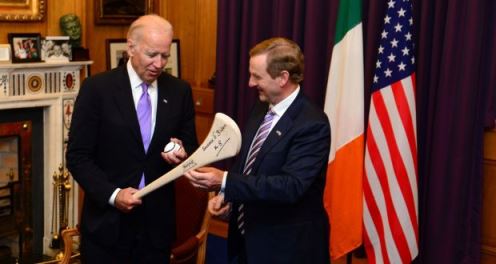
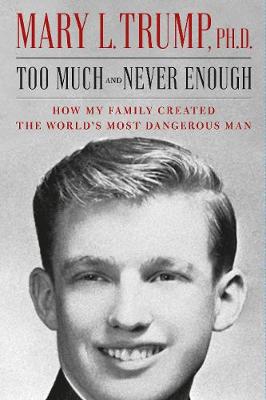
There is jubilation in the Emerald Isle now that Joe Biden is President of the USA. If you are short on facts about his predecessor’s background I suggest you read Mary Trump’s book Too Much and Never Enough.

* * * * *


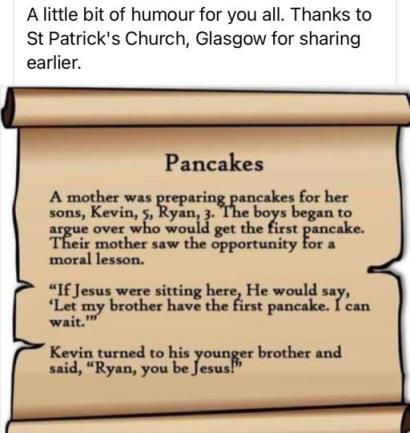
February 16th is Shrove Tuesday (Pancake Day.) So, to help remind you, here is a little pic.


Click on author's byline for bio and list of other works published by Pencil Stubs Online.


Sifoddling Along


By Marilyn Carnell

McDonald County is located deep in the Ozarks of southern Missouri. So deep that it seems time stands still for decades. The most disturbing event in the county was the Civil War/War Between the States/The War of Southern Rebellion/That Late Disturbance (choose the name you know it by). I have read that by the end of the war only eight adults and a few children were living in the county. Not too surprising as both armies occupied the area and the residents either fought, fled or were incarcerated at a Union concentration camp at Granby, but I digress. The second biggest event was THE MAKING OF JESSE JAMES.


From the attention it got in the past 83 years (it was filmed in 1938) you would think it was of the same magnitude as that unfortunate war. It was a beautifully filmed inaccurate account of the James Brothers brief, but exciting career in robbery. I will write about some of the local information that is not widely known.


Henry King, a prominent director at 20th Century Fox decided to make his first technicolor western in Missouri, but unfortunately, St. Joseph had become too modern, so King set out in a small plane to fly over small Missouri towns seeking an authentic set. Thus, Pineville with its central square featuring a brick courthouse surrounded by buildings constructed before 1875 was chosen.


But even Pineville had inched forward since 1882, the year of Jesse’s death. Electric service had been installed and the WPA had financed the paving of the central area with creek rock and concrete (the streets were well constructed and lasted some 60 years). Nevertheless, these modern additions had to be removed or covered up. The power poles came down and the streets were covered with 6 inches of dirt. The film company sent carpenters to construct a few buildings to enhance the ambiance. The Dixie Belle saloon and some other small buildings with false fronts were added to fill in the square.


Some of those buildings are still in use, but after a few years as a movie theater, the town sold the saloon, and it was moved to Bunker Hill to end its days as a dance hall. Apparently, the thought of liquor made them nervous. The town was heavily influenced by the dry movement. After all, Laura LaMance, a local social leader was the National President of the national Women’s Christian Temperance Union.


20th Century Fox cast its brightest stars for the film. Tyrone Power was Jesse, Henry Fonda was Frank and many other well-known actors were in the cast – Randolph Scott, Henry Hull, Brian Donlevy, John Carradine, Jane Darwell and Lon Chaney, Jr. as examples. The lone black cast member, Ernest Whitman, who played Pinkie the hired hand, had to be transported to Neosho each night as there was a county ordinance prohibiting black people in the county after sundown. This law was observed until 1964 with the passage of the Civil Rights Act.


When the staff came to prepare for the actual filming, they were prepared to pay $10 a day for extras. At the end of the depression this was a mighty sum. The local bigwigs reeled back in alarm and said, “You aren’t going to spoil our people that way.” They finally agreed that the pay would be $2.50 per day. I remember many of the people who were hired as extras and love watch the movie to see old friends and neighbors – Mrs. Poindexter, Mrs. Drum, Lucille Allman, Bonnie Belle Sweet, Ramsey Bone, Brownie Bradley, to name a few. One local went on to a fairly successful film career – Dabbs Greer. His last big role was in The Green Mile.


The three months of filming was quite a spectacle. Some days, 10,000 people came to watch the action. This was quite a boon for local businesses and entrepreneurs. Lots of money changed hands. Soon thereafter part of another movie – Belle Starr- was filmed in Pineville. Evidently, all this attention was more than local people could stand and soon they undid the changes that made it a good background for making western movies.


As the movie craze was closely followed by WWII, not much happened until the County Centennial came along in 1949. The civic leaders organized a celebration. The event was so successful that it was re-named “Jesse James Days” and is held every summer to this day.


Sleepy little Pineville is still several years behind the rest of the world. No longer a market town with a community gathering every Saturday, most days you could shoot a cannon down Main Street and not risk any harm. I think they are waiting for an enterprising man to fly over and restore it to a glamorous status once again.


Click on author's byline for bio and list of other works published by Pencil Stubs Online.