Thursday, June 1, 2023

Editor's Corner


By Mary E. Adair

June 2023

“It was June,
and the world smelled of roses.
The sunshine was like powdered gold
over the grassy hillside.”
— Maud Hart Lovelace


June almost always is mentioned in the same sentence about wedding plans. The June Bride is an icon beckoning memories of those marriages licensed and duly performed, but yes--in many different types of ceremonies, or lack of such as could be deemed ceremonious. Your editor's uncle, Jackie Oakley Joslin wed his sweetheart Mary Louise on the fifth; his sister, your editor's mom Lena May Joslin wed John (Jack) Edward Carroll on the 10th; your editor's first marital promises occurred on the 15th of said month. These first two examples lasted until the grooms died; the third for nearly a dozen years, making the claim for lasting bliss, granted by tying the legal knot in the year's sixth month, two-thirds feasible.


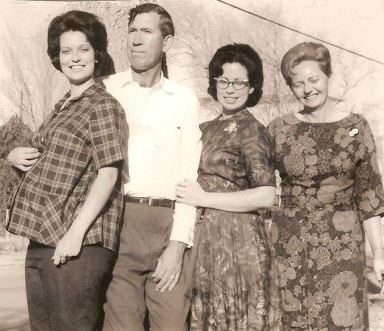
For many the main celebration for which June is memorable is Father's Day. Your editor's dad was an only child which may have caused him to cherish his role as head of a household boasting four daughters, various son-in-laws, and a healthy crop of grandchildren. He was happiest with a houseful of relatives which qualifies him as this issue's model of exemplary fatherhood. The Thanksgiving 1963 pic below displays his almost smug smile, no doubt anticipating the next grandchild, as his youngest daughter Melinda, standing in front of him, would soon be adding her first contribution to the family. I stood behind him, Moma May behind me, and our dinner guest AG Adair did his photography bit for history.


Incidentally, not one author mentioned either weddings or Father's Day, but supplied a variety of subjects. Mattie Lennon updates current info about the Listowel Writers event and tells about Dolly Day in Ireland plans in his column "Irish Eyes." Thomas F. O'Neill devoted his "Introspective" column to his puzzlement about reactions to State vs Church interpretations.


Judith Kroll rhapsodized about Ships and Roses in "On Trek." Marilyn Carnell, author of "Sifoddling Along," got "deathly" serious with great info, while Pauline Evanosky described in "Woo Woo" her first verbal message from Spirit. Danielle Cote Serar faced personal grief in the loss of her friend and discusses it in her column "A Mother's Lesson."


Although Rod Cohenour is still limited in activities as his broken leg heals, he and wife Melinda cooperated to get their columns prepared for publication. In "Cooking with Rod" he features his wife, affectionately called "M" and her take on one of his favorite recipes, "M's Chicken Milanese." She does the column "Armchair Genealogy" and for June is focusing on Ancestry's recently revealed Chromasome Painter a capability for their subscribers.


Even though Bruce Clifford is enjoying a personal hiatus, this issue shows many poems, one which is the only poem ever composed by the late AG Adair, "My Oak Grove." Then there are two more with the Adair copyright by your editor: "RSVP Please" and "Medical Mystery."


Two welcomed poetic submissions arrived from John Blair titled "Payback" and "Old Garden." Walt Perryman shows three: "My Simple Book of Life, "We Can Stray or Stay," and "I Can't Forget Memories." Bud Lemire penned "Greed," "Leonora," and "From The Afterlife, With Love." Three more are presented that were published in this eZine several years ago authored by maternal Grandmother Carrie E. Joslin: "Writer of Kentucky Tales," "Nosebleed" and "Working at Armour's."


We continue to thank our co-founder and webmaster, Mike Craner, whose knowlege and expertise keeps Pencil Stubs Online actually online. He does it well as we are now in our 26th year. Happy Father's Day, Mike!


See you in July!


Click on author's byline for bio and list of other works published by Pencil Stubs Online.
This issue appears in the ezine at www.pencilstubs.com and also in the blog www.pencilstubs.net with the capability of adding comments at the latter.


Armchair Genealogy

Armchair Genealogy

By Melinda Cohenour

Exploring The Chromosome Painter

A couple months ago, this column focused on the latest "bells and whistles" offered by Ancestry in connection with its DNA test results. One of those new features was the Chromosome Painter. Your author declined to expound on this feature as only a very cursory exploration was undertaken. This month we shall take a closer look.

HOW TO FIND THE CHROMOSOME PAINTER:


First of all, it almost seems as though Ancestry chose to tuck this tool away to be found by only the most ardent search. No application title for this Chromosome Painter is to be found on the drop-down list that appears after one clicks the three parallel lines in the upper left corner on the initial screen. As the application pertains to the distribution of meaningful chromosomal data, logic dictates the tool would appear as a subtitle in the DNA section. That is not quite the case, however.


Do click the three parallel bars to reveal the first level options that appear. NOW click on DNA STORY. The next screen displays your most recent Ethnicity Estimate (which changes each time Ancestry updates their computer algorithms to encompass all the data derived from the millions of new tests furnished by its latest testing customers).


We're getting close now, but Ancestry still does not give us a quick click path to our goal. One must now scroll down to where is found NOT a title for Chromosome Painter BUT an invitation to COMPARE MY DNA beneath the introductory section reflecting BETA "Compare with matches" that also reflects profile icons or portraits of YOU and two of your closest DNA matches.


Well, that's intriguing but WE HAVE NOT FOUND THE CHROMOSOME PAINTER YET. Keep scrolling, leaving that fun challenge behind for the moment. Beneath that hyperlink we find in BOLD TYPEFACE the title for "Ethnicity Inheritance" - and beneath that "Your regions inherited from each parent."

THE PIE CHART


Looks like we're getting somewhere. Next is displayed the pie chart labeled at the top YOU and on the left half "Inherited from Maternal" and on the right half "Inherited from Paternal". This helpfully provides the Sideview Technology breakdown Ancestry's new technology utilizes to divide our chromosome data into that portion inherited from each parent by examining information gleaned from test subjects' responses as to how Shared Matches are related. The computer(s) now re-sort those Shared Matches by Maternal and Paternal based on your selections.


Each person has 23 chromosomes, 22 pairs called autosomes, and one of which is referred to as the sex chromosome because this pair of chromosomes determines your gender at birth. The Maternal 23rd chromosome always furnishes an X. The determinant for gender, however, comes from daddy. If the Paternal 23rd chromosome is marked with X, you're a girl (23rd PAIR reads X X). If it's a Y, you're a boy (23rd PAIR reads X Y).


For determining ethnicity only the remaining 22 pairs are utilized. These are sorted by length of coding per pair, longest to shortest. Sideview Technology has been used to divide these lines of DNA by Parent 1 and Parent 2. Ancestry's computers can attribute the distinct coding to the two parents but cannot determine which is Maternal and which is Paternal. That was left for you to determine based on your knowledge of where momma and daddy's families originated using old fashioned document based research.


Further, the computers will compare the strings of coding resident in each chromosome to Ancestry's Reference Panel to pinpoint the ethnic origins of each segment. What is a Reference Panel? Let's use Ancestry's explanation:


What is a reference panel?

A reference panel is a set of people whose DNA is typical of DNA from a certain place—people native to a place or group. To make it into the Ancestry DNA reference panel, people need two things: a paper trail that proves their family history, and DNA confirmation of their ethnicity. Their DNA is what your DNA is compared to when you take an Ancestry DNA test.


To estimate your ethnicity, we find the reference panel DNA that's most similar to each segment of your DNA. Then, we assign your segments to the regions they resemble. For example, if a piece of DNA is most similar to the reference panel DNA from Tonga, that segment will go into the "Tonga" bucket.


Our reference panel has 68,714 DNA samples that divide the world into 84 overlapping regions and groups.


CHROMOSOME PAINTER VS. CHROMOSOME BROWSER

There is a difference. Ancestry says:

    How is a chromosome painter different from a chromosome browser? Chromosome painters display your ethnicities across your DNA and show which ethnicities came from each of your biological parents.
    This is different from a chromosome browser, which displays segments of identical DNA shared by two people. Chromosome browsers are mainly used to figure out relationships to genetic relatives and to link pieces of DNA to specific ancestors.

But what if we want to determine who shares segments of identical DNA?

Again, Ancestry has an answer:

    We do not currently have a compare feature, but if you and a match compare your results yourselves, you may find regions where you share the same ethnicities. If you do, this does not mean you have identical DNA at those places–only that you have the same ethnicities there.


Aaah. YES! Finally we can begin to explore the Chromosome Painter. Remember, we clicked the three parallel bars (top left on your screen) to reveal a listing of options.

We selected DNA and in that section clicked on DNA Story. That selection opened to reveal a screen with a text bar appearing beneath a world map. That text bar reads Ethnicity; Inheritance; Communities; and Matches.

Beneath that world map on which appear areas filled with colored sections (Hint: those are your geographic representations of your ethnic origins), is a headline reading Ethnicity Estimate. Below that is the listing of your ethnic origins. DON'T GO THERE JUST YET.

Go back to the text bar above and click on the word INHERITANCE.


Ethnicity Inheritance now shows a sequence of informative displays:

  • Ethnicity Inheritance. Your regions inherited from each parent. The PIE CHART.
  • The Chromosome Painter. DON'T GO THERE YET.
  • View breakdown. CLICK THIS HYPERLINK.

BREAKDOWN:

Here we are provided a series of supporting factotum:

  • THE PIE CHARTS which display your ethnic origins inherited from Maternal and Paternal contributions. A second PIE CHART displays YOU and cumulates the Maternal and Paternal contributions to show how those combined reflect your percentage for each ethnic origin.
  • A Detailed Comparison that illustrates how each geographic area represents the amount contributed by Maternal PLUS the amount contributed by Paternal which, added together, creates your total percentage for each ethnic group.
  • Explanatory sections to provide information (Inheritance is Random; Their halves Your whole; How do we know this-Sideview Technology; Matches split by parent; and FINALLY Chromosome Painter with an invitation to Explore Now).

Chromosome Painter: THE BAR CHART

ANCESTRY SAYS: Where are your ethnicities in your DNA? With the chromosome painter, you can see for yourself. We’ve “painted” your chromosomes (the colored bars below) with the regions they’re associated with in your ethnicity estimate. Select an ethnicity to see it highlighted. Choose Maternal or Paternal to see which chromosomes were passed down by whom.

The Bar Chart displays the 22 autosomal chromosomes numbered from 1 to 22, each numbered chromosome made up of TWO bars, representing one for Maternal contribution and one for Paternal contribution. You will see the longest stretch of DNA appears in Chromosome 1, and graduates sequentially to the shortest segments of DNA depicted in Chromosome 22.

Each set of rows are "painted" with colors representing geographic areas that correspond to the colors used to represent specific ethnic / geographic origins.

Just above the Bar Chart appears the word Regions. Beneath that word is a row of elliptical words: All (clicking that displays all the colors on all the rows in the entire chart), then separate words defining each ethnicity Ancestry has determined to make up your ethnic inheritance. For instance, mine shows first SCOTLAND. Clicking Scotland closes the All category and now displays where on each row segments of DNA match the Reference Panel to indicate Scottish origins. A bright green 💚 fills in portions of each chromosome number containing such DNA, clearly reflecting Maternal and Paternal contributions. Since my Ethnicity Estimate currently reflects 48% of my DNA to be derived from Scottish ancestors on both sides, large portions of these bars contain green paint.

Clicking on my next largest percentage ethnic group (Ireland) does not close the Scotland group. One must manually click Scotland to close that and reveal only the DNA for Irish ancestors. And, so on for each ethnic origin displayed. If you wish to display more than one ethnic region at a time merely leave the category open. You can pick and choose as many ethnic origins as you wish.

One could say the PIE Chart cumulates the DNA contributions of our parents while the Chromosome Painter BAR Chart distributes those contributions across the paired 22 autosomal chromosomes.

Lastly, Ancestry responds to some Frequently Asked Questions:

FAQ

How can I use this information?

    With this data, you can get a general feel for how recent your connections are to your ethnicity regions. The longer a segment (a single colored block) is for a region, the more recent your connection to that region may be.

What are chromosomes?

    Chromosomes are bundles of DNA in your cells. Most people have 23 pairs. In each pair, one chromosome came from one parent, and one came from the other. The chromosomes that have the most to say about your ethnicities are your 22 autosomes (your non-sex chromosomes), so that’s why we’re only showing you these 22 chromosomes.

What if a match and I have the same ethnicity in the same spot?

    If you and a match have the same ethnicity in the same location on a chromosome, it doesn’t mean your DNA is identical there. You can have the same ethnicity in the same place, but from different patterns in your DNA. With the chromosome painter, it’s not possible to tell where you share DNA with someone.


If your query was not answered, click Read More to reveal an expanded list of FAQ and responses.


After you have explored the Chromosome Painter, it would be fun and informative to go back to the section mentioned in the very beginning of this tutorial titled Compare with matches, marked BETA including a hyperlink COMPARE MY DNA beside profile pics of you and (probably) your two or three closest DNA matches.


This is an area that promises to be of greater value for those of us seeking to identify "missing ancestors". You know, those aggravating gaps in our lineage where a grandfather should appear? Worse yet, as in my children's lineage their paternal grandmother. Their father, my first husband, was abandoned at birth by his birth mother, handing her infant son off to the Miami-Dade Children's Home, a community orphanage.


Florida is one of the toughest states for unlocking birth records for adoptees. For my first husband was adopted about age three. His adoptive mother yearned for naturally conceived and born babies but as a result of an early trauma (she did not fully disclose to me), was unable to. Thus, she adopted Johnny and, later, his sister Ann. She tried hard to conceal that her children were adopted. Easy with Ann because she was a newborn when taken from the hospital by her biological father and Johnny's mother who were later married. But Johnny was old enough to recognize the faked pregnancy tricks employed by their mother. Especially when as a teenager he happened to walk in where his mom was positioning the pillow she used to simulate a late term baby bump.


Even confronted about her pseudo pregnancy, his mom refused to acknowledge and explain. This caused Johnny to reflect on the inconsistencies in his memories and the inadequate explanations supplied. He first began to question the truth of his own origins. It would be the bothersome "thorn in his soul" that would cause him torment the rest of his life. I vowed to him that I would do all I could to reveal the truth of his ancestral past. I still pursue that truth today, not just for my first love but for his children and grandchildren and their descendants as well.


And this new BETA tool might help to identify that long lost woman who desperately sought to conceal her connection to that precious infant.


My daughter, Johnny's child, and her nephew, the son of her older brother have had their DNA tested. The results have revealed half siblings fathered by Johnny. By using this tool to compare UP TO TEN DNA MATCHES at a time, we may be able to close in on that mystery mother.

HOW IT WORKS


The comparison screen is in a spreadsheet format. Column headings are populated by the names of those whose ethnic makeup are to be compared. The default first column is, as would be expected, your name or if the comparison is being done on behalf of another, that person's name. Columns to the right will contain the names of up to ten matches whose results you wish to compare.


The next data appearing below references the ethnic geographic occupying the greatest percentage. Since I have chosen to use my daughter's profile to possibly zero in on Johnny's Mystery Mom, this area is England and Northwestern Europe. Melissa's percentage 38%. We have identified a family of close matches - a mother (probable 2nd cousin), her son, daughter, grandson and possible other relatives who have no tree attached to their tests but share a surname and are Shared Matches. In addition I have chosen to include Melissa's two closest half siblings.


Honestly, I don't yet know what the data is telling me. I can see the daughter inherited more of this ethnic group from her father because her percentage is greater than her mother's. The percentage total for a child is the percentage contributed by the mother plus the percentage contributed by the father.


I can draw no conclusion as to the relationship of the Shared Matches with the same surname since siblings can inherit widely disparate amounts or segments of DNA from their parents.


For now, this Comparison tool is of interest but not extremely informative. It will require more study to determine how or IF it can be used to confirm the suspected identity of Mystery Mom.


This has been a fun yet frustrating exploration of the Chromosome Painter and related applications dreamed up by the scientists and researchers at Ancestry. More fun things I can do in the name of Armchair Genealogy.


See you next month.


Click on the author's byline for bio and list of other works published by Pencil Stubs Online.
This issue appears in the ezine at www.pencilstubs.com and also in the blog www.pencilstubs.net with the capability of adding comments at the latter.


Woo Woo


By Pauline Evanosky

What Does Spirit Sound Like the First Time You Talk?

The first time I heard Spirit say something to me, at first, I thought I had thought it myself. Somehow I knew that was not right. It was like the difference between looking at a picture of what is outside your window compared to actually looking out the window. You might say, “Oh, well, she was probably talking to herself.” I actually do that a lot, but hearing Spirit talk was definitely different from my own thoughts.


Yesterday, I got a telephone call from a longtime friend. She knows that I am a channel. I have shared lots of woo woo stories with her through the years. So, she called and said, “Tell me what you think.”


She was in the bathroom that morning. She was reading a book of daily devotions. Just something to read that can help to start your day right. Her life has been stressful lately, and it has been a real effort for her to be positive. So, as she was reading, she was also thinking about being as positive as she could be. Then she said this thought popped into her head. “Oh, just let it go for today. Just relax and take the day off.” She knew the thought wasn’t about actually taking the day off from work but from the stress of trying to be in the best mood possible.


I told her, “Congratulations. You just heard from Spirit.”


She was surprised.


It happens that way. This thought pops into your head, and you really don’t know where it came from.


It’s probably been happening that way for years, but people just put it down to an overactive imagination. Except, she knew in her heart it wasn’t her thought.


The same thing happened to me a few days before I began to channel. The situation, for us, at the time, was very tense. My husband had broken his back. We didn’t know how long he was going to be in the hospital, how long it would take him to heal, and when he would be well enough to get back to work.


The doctors couldn’t figure out what had happened other than he had a broken back. Financially, we were also in trouble because he was the primary breadwinner in the family at the time, and he could not work. In fact, it was two years before he got another job.


At the time, I had spent several years trying to talk to my Spirit Guide. I couldn’t do any of the exercises in the book I was studying. It was “Opening to Channel” by Sanaya Roman and Duane Packer. I recommend it to anybody who has the desire to talk to their Spirit Guide.


In any case, I was a lousy student. I could not visualize. I could not meditate. I just could not do any of the exercises the way I thought they ought to be done. That was wrong, but I didn’t know that then.


I prayed to God but was getting nothing. It was like he didn’t care about Dennis or our plight. No answer. Nothing. Silence. That was my only standby. I’d been praying to God since I was six years old. Maybe even before that. I can’t remember.


I wanted answers.


I was getting nothing.


My friends were supportive, but they weren’t saying anything other than what I expected them to say. These were the same things I would say to them if they were in the same situation. Time will tell. Try to be patient. Pray.


I was trying to be a writer then, but I was not writing because Dennis was recovering in a body cast at home, and I was just too distracted to write anything worthwhile. He had spent 12 days in the hospital, but we were horribly worried. I was concentrating all my efforts on contacting my Spirit Guide, which by then included trying to make contact on a Ouija Board.


That’s when I had this strange thought while I sat at my computer. It said, “You have to become as innocent as you were when you were a little girl.” It just popped out of nowhere. It seemed a rather specific thought. However, it also sounded like valid advice. So, I tried to relax. I did not recognize that was Spirit at the time. Now, with all that has happened in the thirty years that have passed since then, I do know for a certainty that was the voice of Spirit.


I said to myself, “This is ridiculous. I can’t do anything about Dennis. I can’t get anywhere contacting my guide, and I’ve been neglecting my writing." So, I decided to relax.


However, to cover all the bases, I decided to type with my right hand. My desk space was wide enough to accommodate both my keyboard on the right and the Ouija board on my left. I knew it was going to be a little awkward, but I knew where all the keys were. Typing with one hand was slower, but it could be done, and that way, if somebody in Spirit wanted to say something, my left hand could rest on the planchette and be ready. Did I expect anything to happen? No. With as hard as I had been trying all those years before, I really didn’t expect magic to happen.


Thinking about it now, it seems a little silly, but I did it. Nothing more helpful than that had sprung to mind, so I just decided to try it. All of my concentration became focused on the keyboard. It does take a little getting accustomed to typing with one hand, so I was super concentrated on that. Not five minutes into doing this is when my left hand moved. Zounds! The planchette just took off on a diagonal movement from left to right across the board.


I moved the keyboard aside and put both my hands on the planchette like you are supposed to do. The first question I asked was, “Are you my guide?” The planchette moved slowly up to the YES that was printed in the upper left-hand corner of the board. Then, it began moving around and spelled out a name: S-E-T-H. I said, “Are you the same Seth that Jane Roberts channeled?” The planchette moved to YES again. After that, the planchette began to move aimlessly around the board. It didn’t spell out anything that made sense. I got the impression that just because all of this was new to me, I needed to get used to how things worked. It sounded reasonable to me.


As each day passed, I couldn’t wait to get home from work to try again to speak to my Spirit Guide on the Ouija board. Over the course of a week and a half, my experience using the Ouija board was that my hand on the planchette began to move so quickly that the planchette would get knocked off the edge of the board. After a time, I lost the planchette. It was at that point, when I was looking around for something I could use or make to be a substitute for the planchette, it occurred to me that I could just use my finger. Nowhere else had I read that was possible. I just chuckled and said, “Why not?” I thought to myself, “Who was moving the planchette around? If they were moving the planchette, why couldn’t they move my finger? It’s my Spirit Guide.”


That worked. By then, it was just a little over a week since I had first made contact with my Spirit Guide, my finger was moving like lightning across the Ouija Board, and I began to anticipate when my Spirit Guide was going to spell out.


That is when I said to myself, “I’m going crazy. This is what it must feel like to go crazy. What am I going to do?” That is the precise moment when I first “heard” my Spirit Guide. I remember he said, “Go outside. I have something important to say.” I stepped outside to our front porch, and Seth said, “You can hear me now.” I was shocked. I had no idea this was going to happen.


After that, I could hear him anywhere, at work, in the car, in the grocery store, walking on the sidewalk. It was disconcerting, but I got used to it quickly. In the beginning, I didn’t catch everything he was saying. It was sort of like sticking my fingers in and out of my ears over and over. I could hear something like every two words.


Getting accustomed to hearing from Spirit and then talking to Spirit takes a little bit of effort. Just be polite and calm down. It helps to have somebody in your life who supports you as I did with my husband. In any case, I would caution you to keep it mostly to yourself for the first year. Also, be sure that you only speak to your Spirit Guide in the beginning. It’s just one of the many rules you will make, break and adjust as time goes by and your proficiency increases.


I realize there are all sorts of Folk in Spirit, as I call them, who you will eventually be talking to, but in the beginning, it is better just to talk to one entity. Eventually? You will be talking to all sorts of spiritual teachers, famous people, people in history, your own friends and relatives, and others like your pets who have passed. I even once, just for an experiment, talked to a plastic patio chair. I wouldn’t recommend it. It was very chaotic—nothing I could understand, more like fingernails scraping across a blackboard. My point is you will be able to talk to anybody.


Will you be able to read minds? Maybe. Generally speaking, I’ve concluded that there is some sort of unwritten law that you do not intrude on anybody’s thoughts. Unless, of course, they give you permission to do that, like if you were doing a psychic reading for them. But many times, it has happened when I’ve said something, usually when I am talking to a person unknown to me, and I say something about jam jars in the cupboard put up by Aunt Mable. They almost scream and ask me, “How did you know that?” I have to shake my head and say, I’m sorry. It just sort of came out. What it means is that their Aunt Mable wanted to pass something along. It happens. It happened once to me in the grocery store with a total stranger.


You will always remember the first time Spirit talks to you. You don’t have to officially be psychic. It helps to be as curious and as innocent as you were when you were a child. However, I am of the mind that everybody is psychic, and everybody can talk to Spirit.


Thanks for reading.


Click on the author's byline for bio and list of other works published by Pencil Stubs Online.
This issue appears in the ezine at www.pencilstubs.com and also in the blog www.pencilstubs.net with the capability of adding comments at the latter.


Cooking with Rod


By Rod Cohenour

Memorial Day weekend has arrived. A time to commemorate our Military heroes, family members who have preceded us beyond the veil, and a time to rejoice in the company of our living friends and family. What better way than to prepare a delicious meal and share fond memories.

My sweet wife has another great recipe for the occasion, her Chicken Milanese made with her signature sauce. Here's her recipe. Enjoy.

Bon appetit ~!

M's Chicken Milanese

Ingredients:

    • Six boneless skinless chicken breasts, flattened to an even thickness to ensure even cooking
    • 2 Tablespoons oil, corn oil provides a great flavor
    • 1 cup seasoned flour ( just sprinkle with ground black pepper, and a sprinkle of Italian Seasoning, whisk)
    • 2 large bell peppers, seeded, cut in 1/2" pieces
    • 1 bunch green onions, diced (use green tops as well as bulbs)
    • 1 large (23.2 oz or 28 oz) can condensed tomato soup
    • 1/2 cup water (can add more if needed)
    • 1 Tablespoon Italian seasoning
    • 2 teaspoons Oregano
    • 2 teaspoons Marjoram
    • 1/2 teaspoon cinnamon
    • 1/2 teaspoon black pepper
    • Fresh sweet basil leaves, chiffonade cut
    • 2 lbs spaghetti, prepared per directions on pkg (use pasta of your choice of course)
    • 2 Tablespoons butter
    • 1-2 Tablespoons dried parsley (your taste preference)
    • Fresh grated or prepared Parmesan cheese


Instructions:

    1. Heat oil in heavy skillet. Rinse chicken in cold water. Dredge in seasoned flour. Brown quickly on both sides on medium high heat. Lower heat.
    2. Mix soup, water (used to rinse out can), Italian seasoning, and spices. Pour over chicken fillets in skillet. (We use our large oblong electric skillet with its domed lid.)
    3. Top chicken with Bell pepper and green onions. Bring just to a simmer and cover tightly. Cook, without stirring on low heat for about 30-45 minutes. (See below. Chicken is done when piercing in thickest part results in clear liquid being released.)
    4. Prepare spaghetti, drain, add butter and stir to coat pasta. Cover and keep warm.
    5. Check chicken to see if tender. If not cooked through and tender, may need to continue cooking for up to 15 minutes
    6. Toss spaghetti with parsley.
    7. To plate: top spaghetti on individual plates with a chicken breast fillet and then sauce. Sprinkle with parmesan and garnish with sweet basil.
    Best served with hot crusty bread, a crisp salad and creamy Italian dressing.


Click on the author's byline for bio and list of other works published by Pencil Stubs Online.
This issue appears in the ezine at www.pencilstubs.com and also in the blog www.pencilstubs.net with the capability of adding comments at the latter.


Sifoddling Along


By Marilyn Carnell

Planning The End

I always felt younger than the calendar said. This was probably due to my being the “baby of the family”. I was the youngest of 20 cousins and was cosseted accordingly.


Another thing that encouraged me to think I was younger was that my friends are of all ages and interests. This puzzles some people who liked to flock with birds of a feather. Because my interests were eclectic, I was attracted to people different from me as well as those who echoed my beliefs and it kept me thinking I was young,


But lately, I have become more introspective and realize that at age 82 I am near the end of my life. This is a sobering thought. How am I to prepare for leaving this world in an orderly manner? It is time to consider how to prepare and simplify the way my family and friends will adjust to my absence. As the youngest in my generation, I have seen many pass before me and have had to deal with the detritus of their lives. I want to spare my immediate family that burden and thus have decided to take care of as much as possible before that day when I hopefully slip away quietly in my sleep.


Dying is not easy or pleasant to think about yet. I hope that when my time comes, I will be tired of life and welcome the great sleep. At least that is how I feel today. Due to the experience, I have had in dealing with the deaths of others and the aftermath, I have already taken many of the necessary steps to spare my loved ones. Already in place are:

  • My will
  • A trust
  • Delegated Power of Attorney for my healthcare
  • Delegated Power of Attorney for my fiscal matters
  • Begun completing Next of Kin files
  • Had my home evaluated for my safety – removed rugs, put up grab bars, etc.
  • Am planning to tour senior living options so that if I break a hip, develop another serious health problem or most horrifying have dementia and can no longer live alone, we will know where I prefer to live.
  • Begun to give items that are precious to me to people who will appreciate them.
  • Am developing a collection of essays I have written to leave behind a record of my thinking and interests.
  • Decided that cremation is the best solution as I wish to have a tombstone at a plot in the Jane (MO) Cemetery and as it is 600 miles away, it may not be convenient to transport me there right away and a small box in the closet isn’t very intrusive. Caskets are very inconvenient.


Although my plans are simple, I know that mishaps can occur. I have heard stories from reliable sources about such things. In one case the crematorium in a small town stored the “cremains” (Yes, they all look alike.) in large coffee cans until the family chose a suitable container. A new employee was sent to scatter rocks on the sidewalk to prevent an accident on the icy way. Yes, he used cremains. When the family came there was nothing to do but grab a handful from other cans and recreate “Uncle Zeke”.


I want a celebration of my life, rather than a doleful funeral. I recall going to a service that freaked me out. The church had a very low ceiling, and the crowded room enhanced the feeling I was in a coffin myself. The preacher was determined to give the best Hellfire and Damnation sermon and scare us into behaving. He kept repeating “Bobby wants you to come to heaven and be with him. You must repent and be prepared to go.” All I could think of was “But I’m not ready.”


I prefer to have people I love gather to exchange stories about funny things I have said or done, any kindnesses I have shown, and that I tried to make the world a better place.


Click on the author's byline for bio and list of other works published by Pencil Stubs Online.
This issue appears in the ezine at www.pencilstubs.com and also in the blog www.pencilstubs.net with the capability of adding comments at the latter.