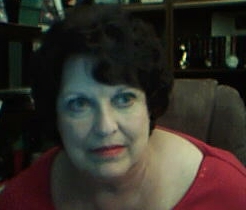
Genealogy is my passion. I dream
of my ancestors and the fascinating lives so many led, the people they
encountered, the struggles they faced and the impact they had on the
history of our world. Every day I research I find some kernel of
wonder, a source of amazement or a chuckle. Some of the stories
uncovered leave me in tears but more often my thoughts turn to pride.
Genealogists create their family trees in a number of
ways. Some want “Just the facts, Ma’am” as Sgt. Joe Friday was wont to
say – bare bones, direct bloodlines only, names, dates of birth,
marriage and death and a list of the offspring. However, one of my
favorite researchers is a cousin descended from our common Bullard
progenitor from centuries past, Joseph Bullard (some list as Major
Joseph Lindsey Bullard, choosing to use his rank as a Revolutionary
patriot as well as a middle name attributed to him). This researcher,
our modern day Joseph Bullard, does an awesome job, preferring to paint a
full portrait of the life and times in which the ancestor struggled
with the adversities and met the challenges in his or her path. To my
knowledge, this cousin has confined his research to the study of maps,
history books, paintings, family documents, court records, newspaper
accounts and other documentation for only four individuals thus far: my
5th great grandfather Joseph Bullard, his son John Bullard (4th great
grandfather), John’s son Isaac Bullard (next younger brother to my 3rd
great grandfather Henry), and Isaac’s grandson, Paris, the researcher’s
own direct line ancestor. Of course, he lists seven generations
descended from Joseph Bullard, the Patriot; however, the full narrative
texts replete with illustrations enlivening each narrative are currently
confined to these four individuals. The treatment he has chosen
creates more than a sketch, fully a rich tapestry that places the reader
in the very midst of each generation’s culture.
(See: bullardgenealogy.com )
My preferred method of research falls, haphazardly – I
fear – somewhere in the middle of these two widely opposing processes.
First of all, our family tree was an inherited body of work from four
primary family groups. My sisters, Mary Carroll Adair, Jacquelyn
Carroll MacGibbon and I worked together to build our fledgling tree
using the photocopied works handed down to us by our mother, our
maternal aunt and their mother, our grandmother Joslin. We had
materials from family historians concentrating on four surnames:
Bullard, Hopper, Joslin and Godwin. Mary and Jacquie took turns reading
to me while I entered the data into our very first digital family tree
software application. It was laborious, yes. But, it was also
tremendously fun. We marveled together at some of the names, the bits
and pieces of history that had found its way into the photocopies and,
admittedly, we argued a bit over some of the data and where it actually
fit.
There were mistakes in those original works.
Redundancies had occurred as the creators of the histories had either
lost their own place in whatever source documents they were using, or
typed the same page again after stopping for a day or a week or a month
before picking the work up again. Or, maybe they merely worked from
oral histories, old letters, best memories of surviving relatives. For
whatever reason, my research has resulted in some surprising
disillusionment in many cases as I discovered family lore was not always
substantiated by documentation.
And now we come to the reason my tree is a mixture of
lineal descent, painstakingly listing names, dates of birth, death,
marriage and descendants and … stories. Wonderful stories discovered as
I strove to document the lineages first entered. For it is imperative
that the genealogist seek to document each fact entered. In today’s
world documentation is at our fingertips through the Internet. Just
type in a name, a date, a fact and thousands upon thousands of possible
sources are offered at the click of your mouse. This is both incredibly
helpful and, at the same time, fraught with opportunity for mistakes.
My chosen method has been to work from my own core
family as the starting point, with facts, names, dates and so forth that
are known to me and familiar. My siblings, my parents, grandparents
and children, nieces and nephews. For my purposes, there are certain
sites used constantly all day long: Ancestry, Find A Grave, Family Search, RootsWeb and Google.
These are my primary resources, a mixture of relatively cheap and free
tools available to me from my “armchair” (you know, that chair with the
wheels and arms that sits in front of your personal computer if you are
not hooked up with a laptop or notebook computer?)
Ancestry now has available to its subscribers
literally millions of scanned original documents: census records from
1790 forward, including those from states, Indian enrollment lists such
as the Dawes registry, military registration cards from the Civil War,
each of the World Wars, the Korean conflict and Vietnam, marriage, birth
and death certificates and a myriad of other sources. You can even
find your more modern ancestors’ names in city directories complete with
street address, often the trade or occupation of the primary and the
spouse’s name. Never merely enter the data. Take the time to click on
the original document. This is particularly informative with old Census
documents. Our ancestors did not have the ease of mobility afforded us
today. The field of potential mates was relatively small and usually
included those whose families traveled cross country in those westward
bound wagon trains with our ancestors or living with the neighbors whose
farms were enumerated immediately before and after our own folks. The
US Federal Census has evolved through the centuries along with our
government’s most pressing need for information. The 1790 Census came
about as a result of the recognition that the government needed to know
the pool of families in each state from which soldiers could be drafted
following the Revolutionary War. As tensions with other countries
flared or waned, the census questionnaire varied. Perhaps taxation was
the most pressing need; thus, queries about values of real and personal
property appeared. Then it became clear familial relationships were
becoming more difficult to ascertain as the population grew and our
forebears migrated in search of richer farmlands, gold, adventure or to
protect their family from hostile forces. Search those census records.
Be alert for familiar names. I usually scan the immediate page, then at
minimum look at the preceding and following pages.
Find A Grave also affords the researcher immense
data. This is the modern armchair genealogist’s answer to the work
started by local genealogical societies from centuries past. My
grandmother, Carrie Bullard Joslin, finished her chores, doffed her
cooking apron, donned her sunbonnet, packed a picnic lunch, grabbed
chalk and graphite, onionskin paper and lightweight construction paper
and headed to the local cemetery. There she would trace the headstones
for hours. She was not alone in this endeavor. Thousands of devotees
provided their local historical society with these etchings, which would
be turned into lists and made available through local libraries and to
their memberships. Today’s tireless contributors use their iPhones and
digital cameras to photograph the cemetery entrance, their GPS and maps
to provide coordinates and directions for those off-the-path family
cemeteries and pics of headstones. These are then researched at home in
an attempt to find and utilize obituaries, family trees and other
sources to provide as full a list of the persons who have found their
final rest in that particular cemetery. Beware. Not all the
information is accurate. Not even those dates etched into the stone.
Be sure to document these dates by other sources as well. My hat is off
to the volunteers who have enriched our lives with their work in this
regard!
Google and other search engines do the work for
us across the ether. In the old days, one had to drive to NARA offices,
libraries, cemeteries, courthouses and other places to search for hours
in the indices for family names, scan microfiche, then handwrite, or
pay for photocopies of selected pages. A full day’s work may contribute
not much more than a name, a single fact, or nothing. Today, the
armchair genealogist has available thousands of potential treasures. I
caution again. Never, enter the data without attempting to
cross-reference factual content with actual documents to ensure you are
not putting someone else’s story into your tree.
Similarly, the other Internet sources (RootsWeb, Family
Search, Fold3, etc.) are replete with the work of other researchers,
books that may contain reference to your ancestors, photographs others
may have shared, or mention in historic documents.
Another essential element for me is my printer/scanner.
I have begun a project to scan in photographs from old albums. It is a
tedious but rewarding project for sure. Many times I cannot identify
the faces that look out at me from these yellowed, dog-eared pics of
old. Often my attempts have been foiled by the practice of gluing down
the photograph in the album, effectively obscuring any notes that may
have been made on the reverse. And, to my dismay, I waited too long to
begin this process, having lost my mother, her sister and their mother
in years past who may have been able to provide those missing facts.
This
brings me to my final (for today) hint for you armchair genealogists:
Scan those photos now. Include names, dates, places. Identify,
identify, identify. Purchase a digital image editor. Such software
provides immeasurable aids to make your photographs clearly legible.
Higher resolution scans produce photos that can be viewed as a much
larger pic without losing details. Water stains, tears and other damage
can often be repaired. The software and a little practice using it is
well worth the investment.
Finally, simply enjoy your efforts. My mixed bag of
bloodline relatives and distant in-laws, 8th cousins and so forth has
filled my memories with some incredible characters. Most recently, a
maternal great-grandfather of my grandmother’s eldest brother’s wife…who
happened to be a Lenni-Lenape native American who became known as a
Delaware (by the white settlers), a Chief of his tribe who spoke seven
languages including perfect English, negotiated with the United States
government, made several trips with John Charles Fremont at the behest
of the government to California, fought in the Mexican War under
Fremont, saved Fremont’s life and the life of his other close friend,
Kit Carson, was a personal friend of President Abraham Lincoln and…of
Sam Houston. Wow. James Sa-Gun-Dai (Secondine). Look him up. Stretch
your imagination. Enrich your life. Become an armchair genealogist,
or at the very least, an armchair historian and researcher.
Click on author's byline for bio and list of other works published by Pencil Stubs Online.
|


 Posts
Posts
No comments:
Post a Comment